Microscopic Theories of Time-Reversal Symmetry Breaking in Superconductors Through Loop Supercurrent Ordering
This chapter is the mechanism chapter for loop-supercurrent time-reversal symmetry breaking. Several older pages developed pieces of the story as separate manuscripts: frustration-mediated phase selection, C4 susceptibility, magnetic-moment estimates, Leggett-mode observables, and microscopic spacer searches. The thesis needs a narrower reading order.
It also follows directly from the obstruction isolated in the INT chapter. There the missing ingredient was not the algebra of a TRSB order parameter, but the coexistence of finite superconducting amplitude with a source-free selector for the time-reversal-odd coordinate. The loop-supercurrent problem tests the same design principle in a different space: the TRSB coordinate is now phase/current winding rather than pair-spin imbalance.
A PRB-style manuscript version of the current loop-supercurrent story is archived with this chapter: loop-supercurrent PRB manuscript. The full thesis-local manuscript PDFs are also collected in the final appendix on publication manuscripts.
The essential story is:
- frustrated superconducting components can select winding phases;
- winding phases carry gauge-invariant hopping currents and magnetic response;
- compact microscopic self-consistency strongly constrains which routes can supply superconducting amplitude;
- amplitude-reservoir constructions separate superconducting amplitude support from phase selection; the Josephson-island model gives the strict positive finite-device example, while signed onsite crystal-bath smokes now give microscopic reservoir-band existence checks.
The promoted positive example is the long-soft Josephson-island geometry. It uses real hoppings and no imposed flux, then compares uniform, staggered, and the two time-reversed winding seeds with the same Hartree–Fock–Gor’kov bookkeeping. At the accepted point the two winding branches are degenerate and lower than the best nonwinding branch. The remainder of the chapter explains why this device/reservoir route survives tests that compact molecule or onsite-only routes usually fail.
The current stop line is deliberately narrow. The successful C4 result is the tuned long-soft Josephson-island calculation: all four branch seeds are run with the same HFG bookkeeping, the two winding partners are degenerate, and the winding branch is lower in free energy than the best nonwinding branch at the quoted residual threshold. The compact and bulk C4 screw-cell calculations are not the same claim; they produce clean winding basins and very small near-crossings, but the best unrestricted rows remain slightly uniform-led. For C3, the analytic central-node rule and constrained lattice branches remain useful mechanism diagnostics, and the signed crystal-bath smoke shows that a pair-susceptible reservoir can support a finite winding solution. The strict onsite-Hubbard C3 molecule, lattice, and cluster recovery scans, however, have not produced a robust superconducting winding ground state. This is the point at which the thesis stops adding mechanism variants and treats further model development as future work.
The design principle can be stated as an assembly rule, but the assembly rule is not the proof. Begin with otherwise conventional superconducting islands and real hoppings. Add normal or repulsive channels where anomalous density is energetically costly, and arrange the geometry so branch textures can be distinguished by node/antinode structure on those channels. Then run the self-consistent mean-field problem and compare the uniform, staggered, and two winding branches with the same free-energy bookkeeping. Compact microscopic systems usually fail this last step: they become amplitude-starved after Hartree relaxation or lose to a nonwinding competitor. The positive route is therefore to separate amplitude support from phase selection. In one realization, engineered Josephson islands support amplitude while soft normal channels perform the selection. In a newer microscopic reservoir-band realization, pair-susceptible bath orbitals support amplitude while signed positive-(U) selector sites keep the local HFG update fully self-consistent.
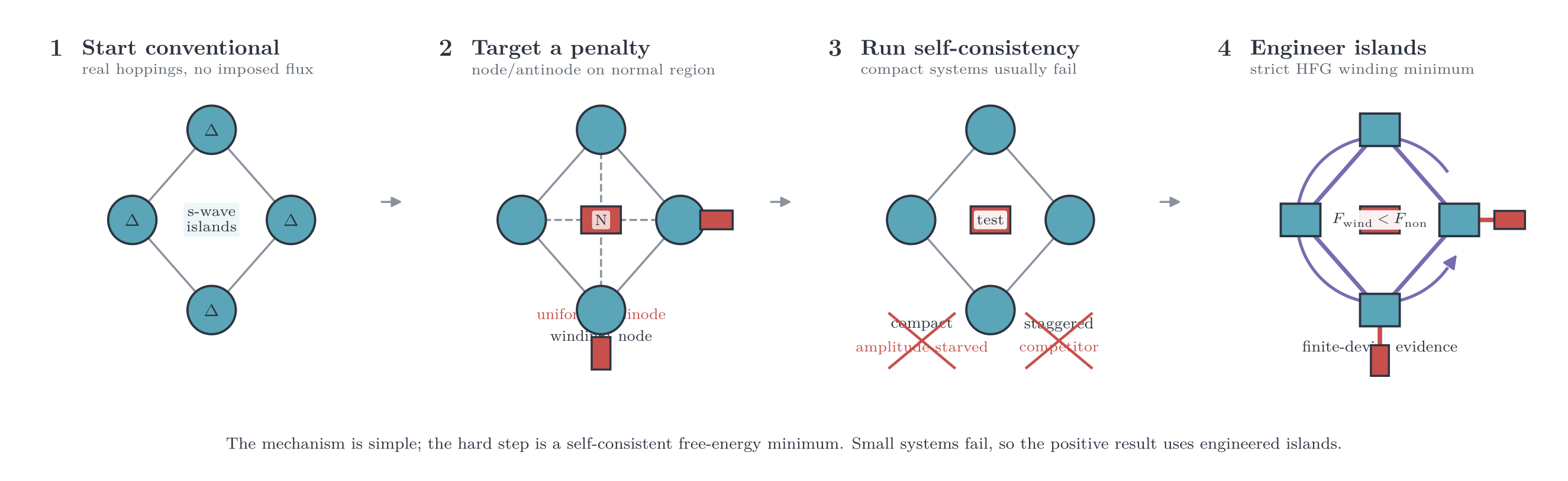
Figure 13.1: Design-rule schematic for interference-selected loop-supercurrent order. Conventional superconducting islands and real hoppings are supplemented by costly normal channels with node/antinode structure. The self-consistent free-energy test is the hard step: isolated compact systems usually fail by amplitude starvation or by losing to a nonwinding competitor, so the positive constructions add either pair-susceptible reservoir baths or engineered Josephson islands. The schematic is pedagogical; ground-state claims still rest on residual-controlled branch free-energy comparisons.
Branch Language
The useful branch basis is shared across the chapter:
- uniform: all components have the same phase;
- staggered: phases cancel across adjacent components and often create inner nodes;
- winding+: phases circulate one way around the loop;
- winding-: the time-reversed partner.
The winding branches are the TRSB candidates. They are physically meaningful only when they are selected by the same free-energy accounting used for the uniform and staggered competitors.
Frustrated Phase Backbone
A fixed-amplitude four-component loop gives the analytic guide
The TRSB stationary branch satisfies
and therefore appears only for
This follows from
so the TRSB stationary point exists only when the solution for (\cos\theta^\ast) lies inside ([-1,1]). The curvature of the TRS branch is (4(J-2J_d)), so the same line is also the relative-phase softening line in the phase-only backbone.
This analytic threshold is a mechanism guide, not the final microscopic selection rule. BdG spectra, amplitudes, Hartree/Fock fields, and competing node structures shift the practical result. The derivational details behind the threshold, curvature, current definition, and selection-rule algebra are collected in the loop-supercurrent appendix.
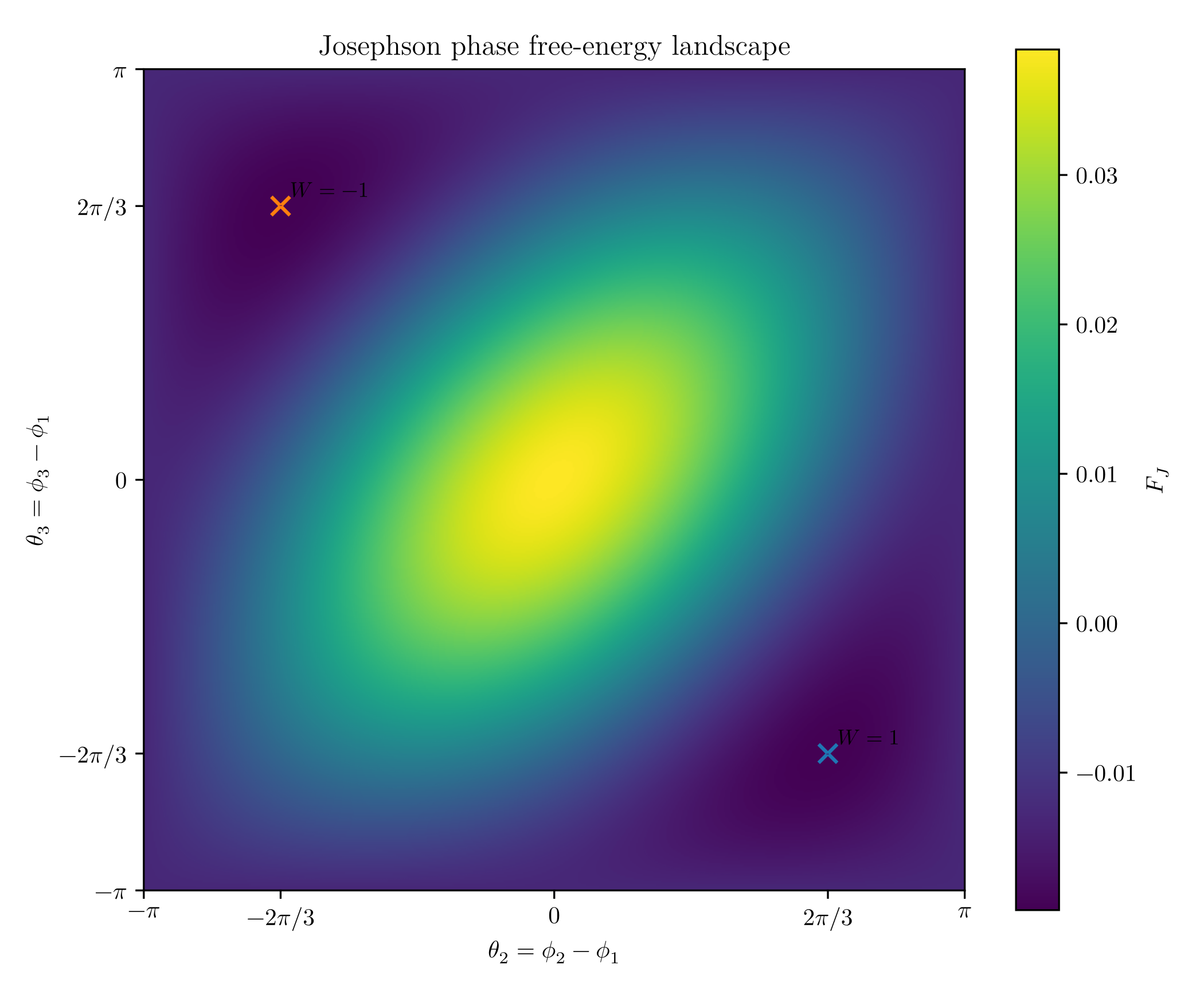
Figure 13.1: Phase free-energy landscape for the loop-current model.
BdG Loop-Current Diagnostics
The BdG calculations show that winding branches are not just phase cartoons. They have branch-resolved quasiparticle spectra, density of states, finite hopping currents, and a calibrated orbital magnetic response.
The microscopic current used here is the hopping current, not the current obtained by differentiating an assumed phase-only Josephson energy. For a normal hopping (t_{ab}c_a^\dagger c_b+\mathrm{h.c.}),
It is therefore a property of the BdG eigenvectors and occupied quasiparticle states. The phase-only current is useful as a circuit-scale guide, but the BdG hopping current is the observable used for the microscopic magnetic-moment estimate. Reversing the directed bond reverses the sign, (I_{ba}^{\rm BdG}=-I_{ab}^{\rm BdG}), so only circulation and time-reversed sign reversal are physically significant.
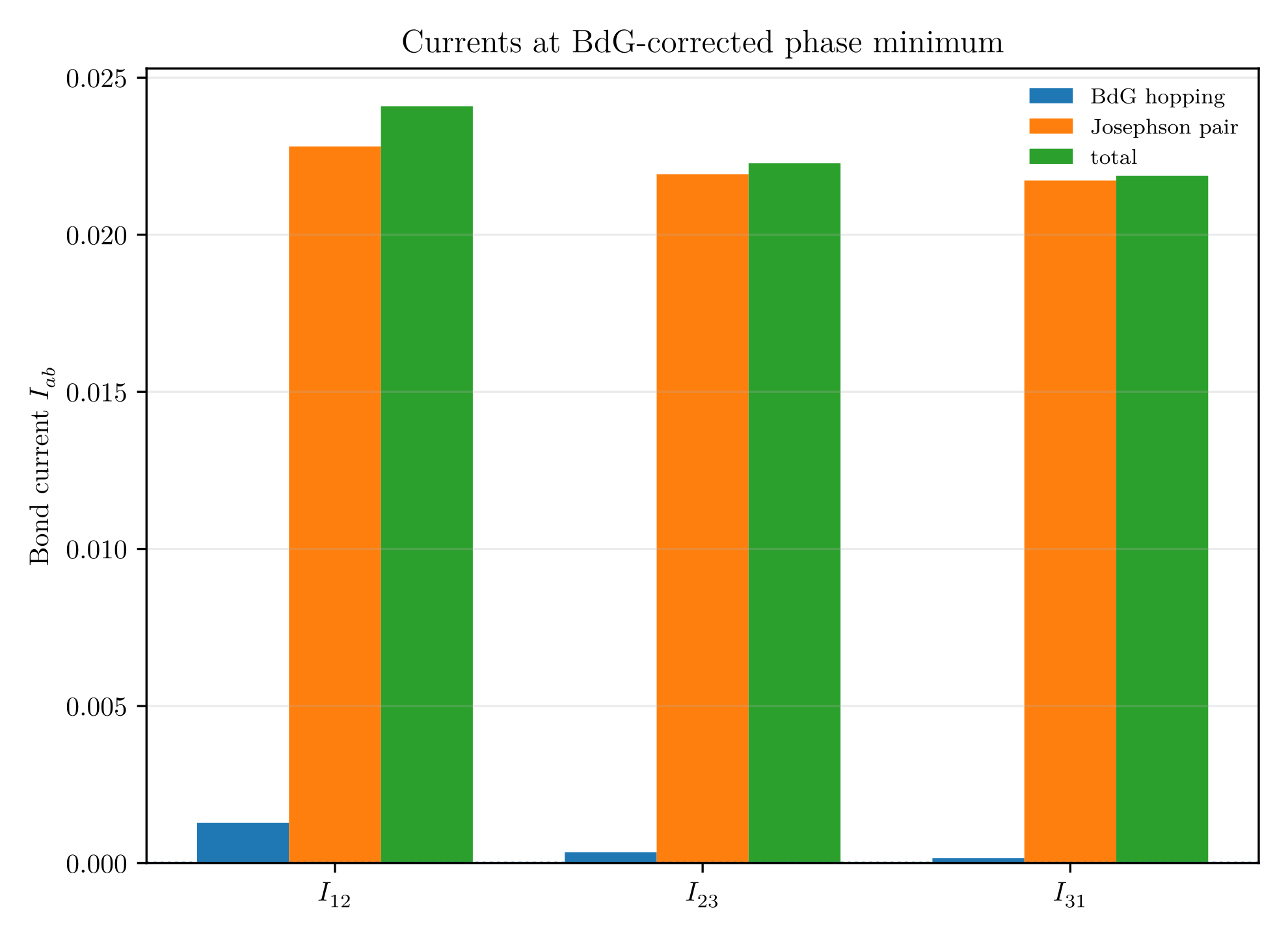
Figure 13.2: BdG phase-minimised currents.
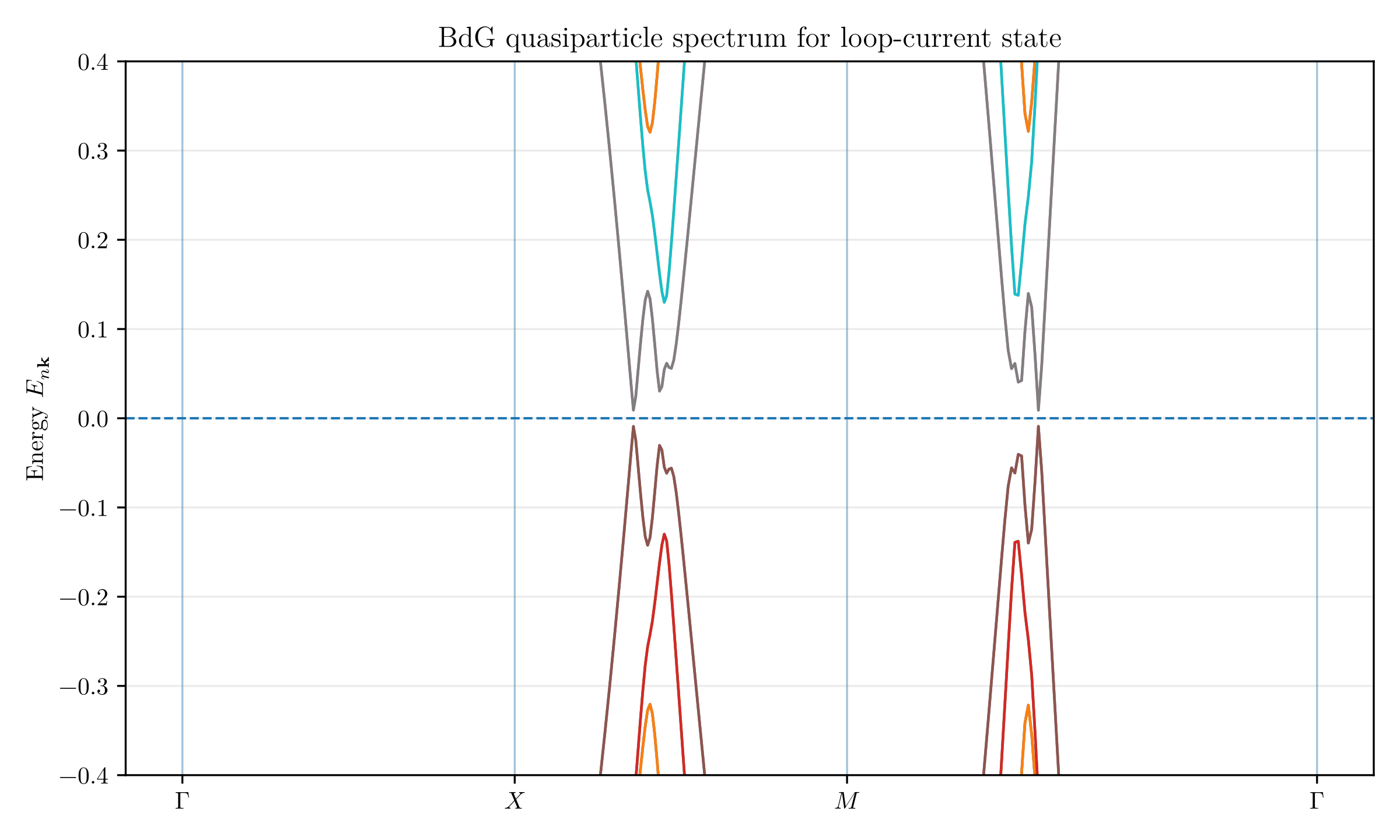
Figure 13.3: BdG quasiparticle spectrum.
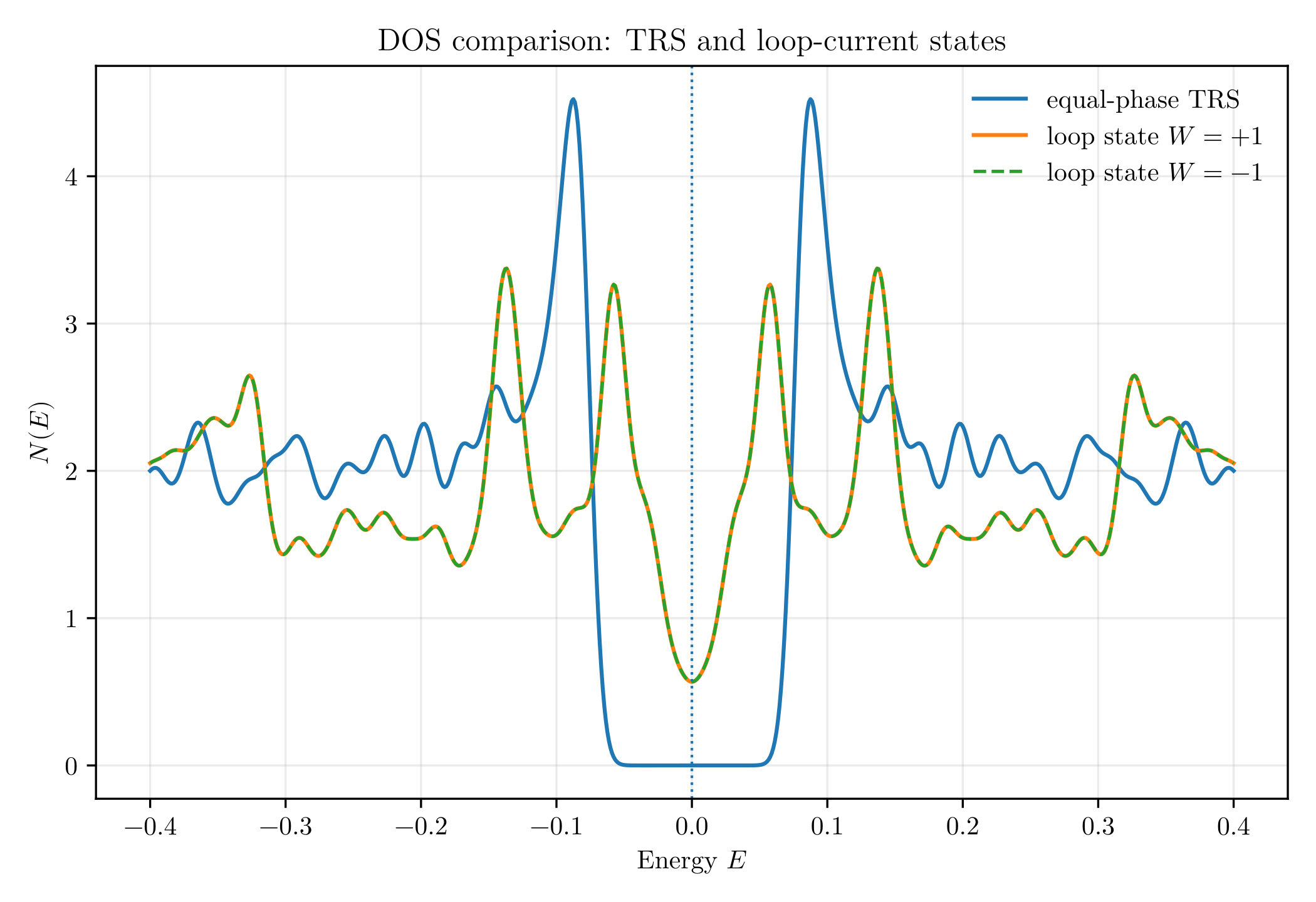
Figure 13.4: TRS versus loop-current density of states.
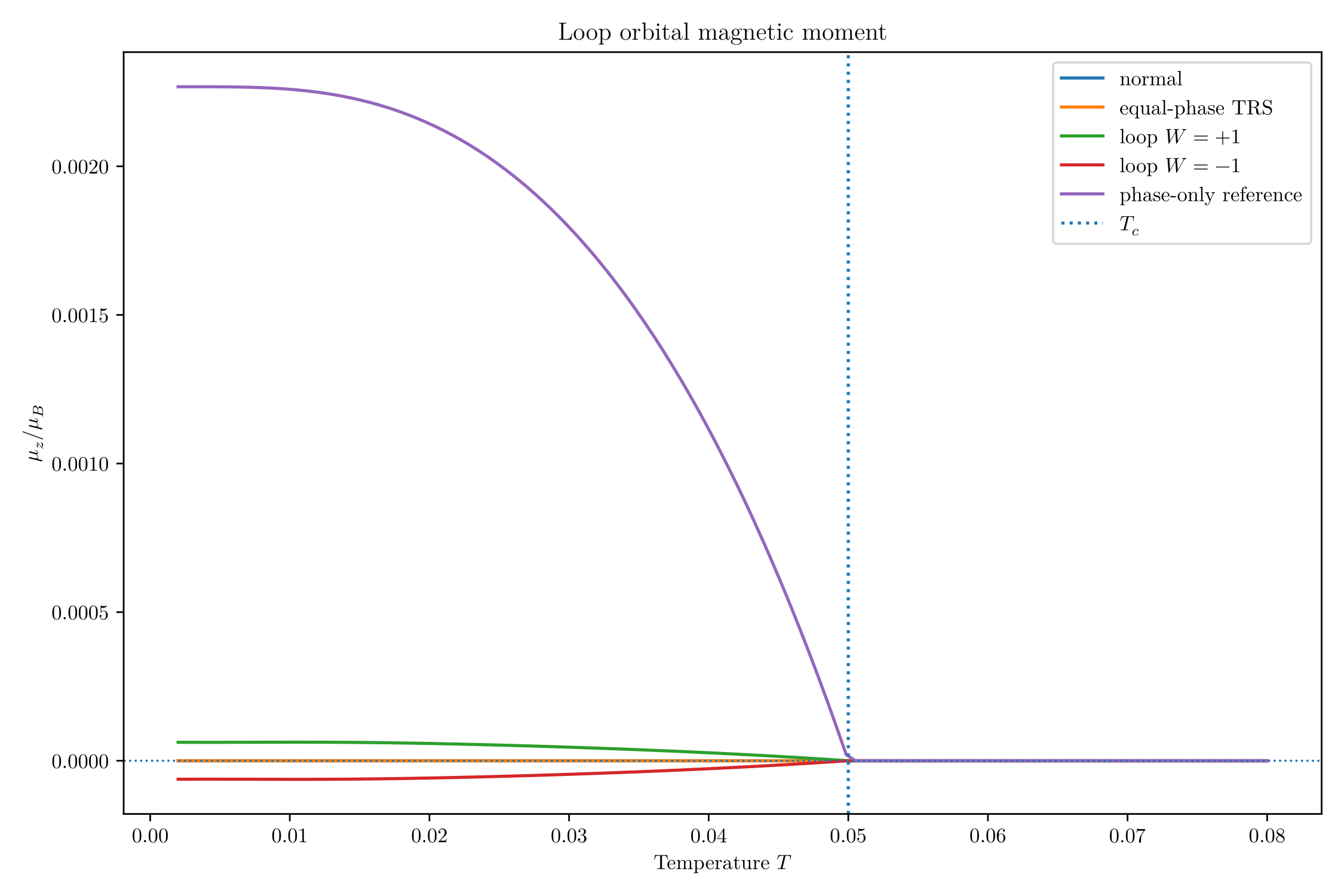
Figure 13.5: Loop-current magnetic moment estimate.
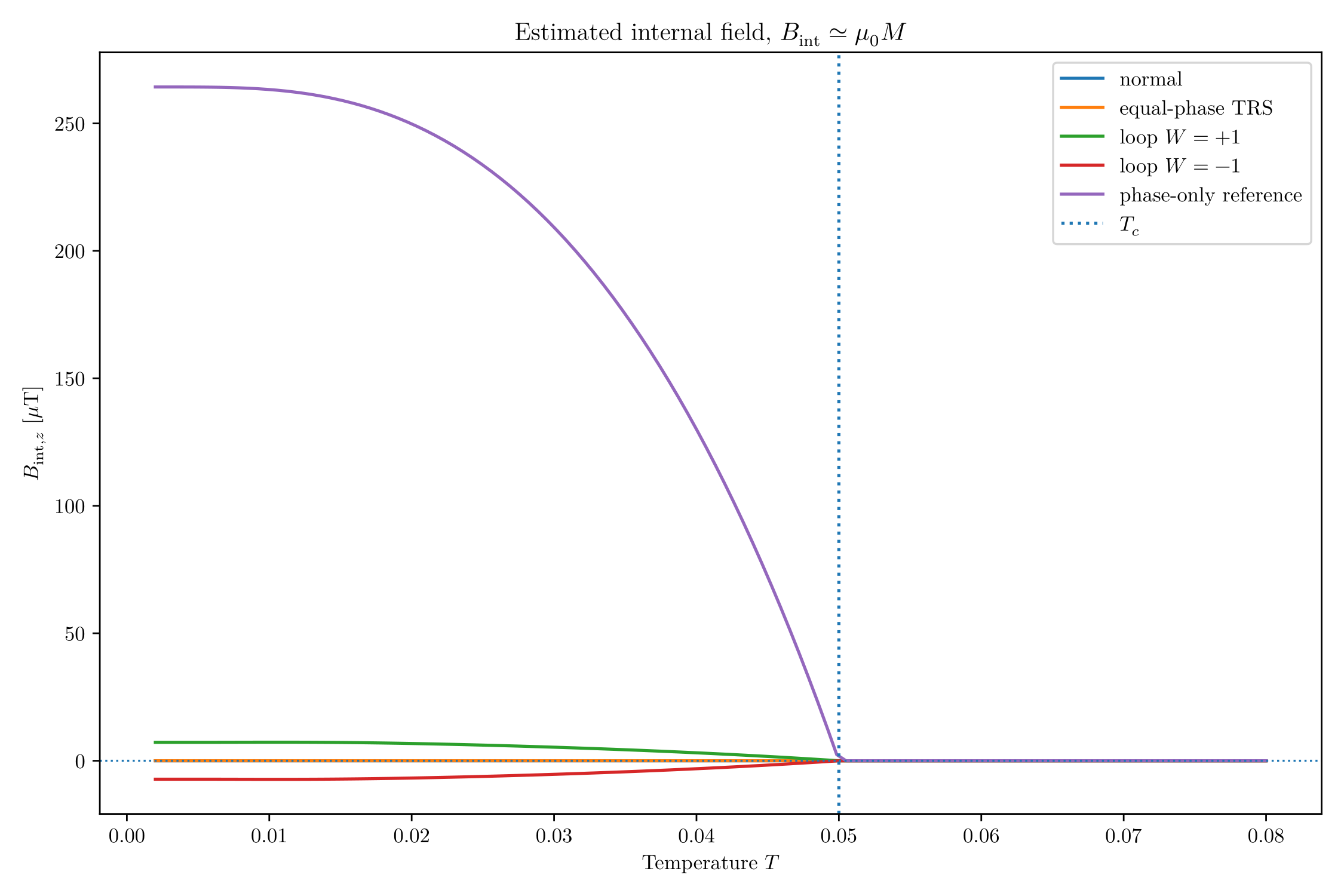
Figure 13.6: Calibrated internal-field estimate.
These observables establish what a selected loop-supercurrent state would look like: opposite chiral branches, circulating microscopic current, and a small but finite magnetic signature. They are diagnostic observables after branch selection, not independent ground-state evidence.
Relative-Phase Observables
The same branch structure produces low-energy relative-phase response. The older Leggett-mode and response-map pages should be read as supporting observable estimates: TRSB winding branches soften a relative-phase sector and can produce Raman/THz response templates. They are not separate result chapters, and they do not replace the static free-energy comparison that selects the branch.
The useful takeaway is that loop-supercurrent ordering should be diagnosed by three things together: free-energy branch selection, current/moment response, and relative-phase softening. Possible semiclassical focusing of those collective-mode envelopes is a later observable question, not part of the ground-state proof; the optional background is kept in the appendix on caustics and semiclassical focusing.
| Observable | Role | Interpretation |
|---|---|---|
| Branch free energy | Selects between uniform, staggered, and winding states | TRSB is only a ground-state claim when the winding branch wins the same variational comparison. |
| Hopping current and orbital moment | Identifies the broken-time-reversal response | A winding branch carries circulating microscopic current and a small calibrated magnetic field. |
| Relative-phase response | Connects static order to spectroscopy | Soft phase modes give Raman/THz signatures complementary to magnetic probes. |
Microscopic Selection Tests
The microscopic searches are the decisive constraint. Spacer, contact, C3, C4, molecule, lattice, and cluster variants all test the same idea: arrange normal or repulsive regions so that a winding phase texture creates destructive interference nodes where anomalous density would otherwise be costly.
The mechanism can appear in reduced and finite calculations. In particular, soft-contact geometries can produce self-consistent winding candidates and node/antinode patterns consistent with the intended saving. Those scans are useful candidate-generation and mechanism diagnostics. The strict ground-state claim is made only when uniform, staggered, and both winding branches are converged and compared with the same residual and free-energy bookkeeping.
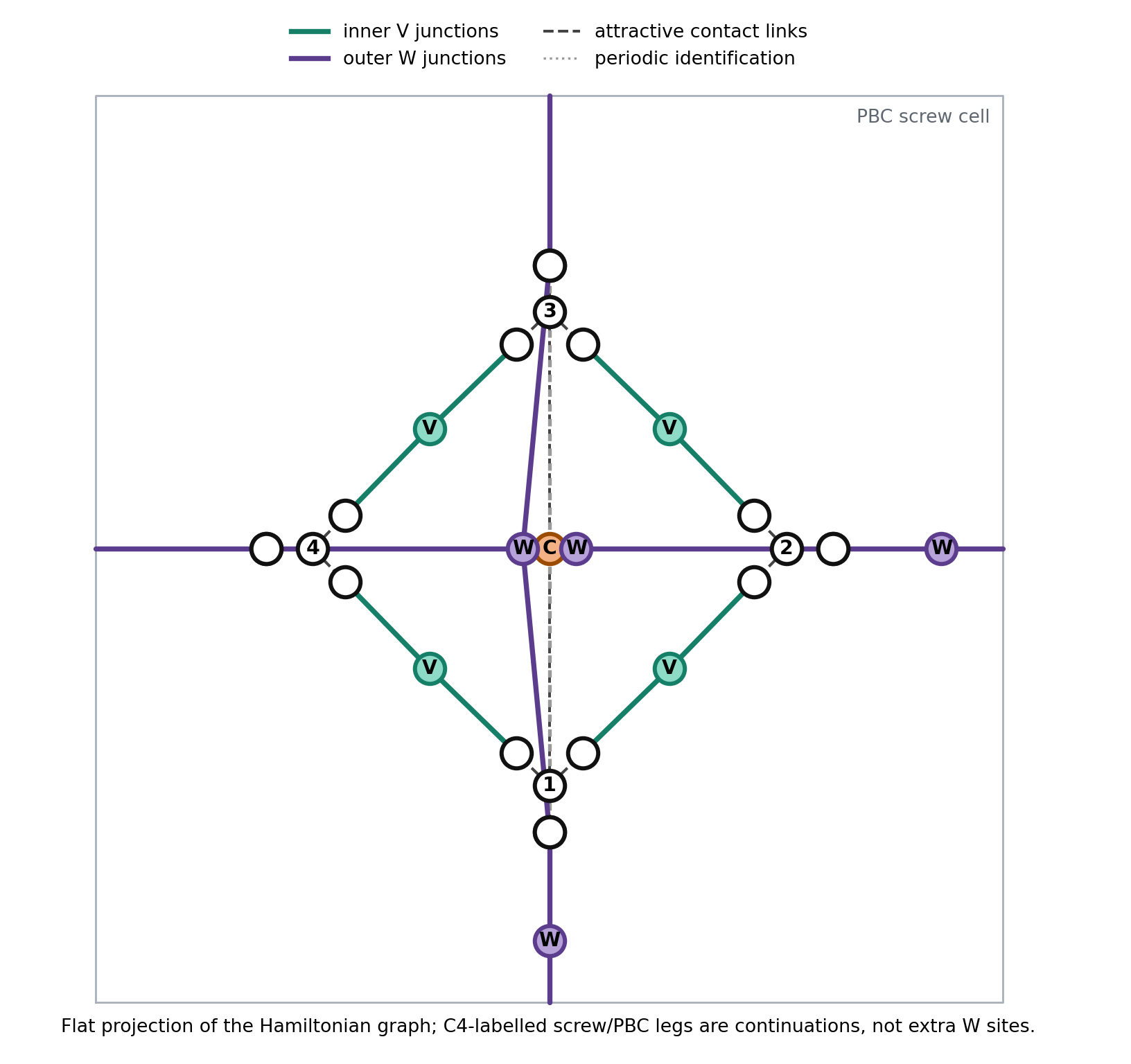
Figure 13.7: Microscopic loop-supercurrent connectivity. Flat projection of the C4-labelled screw-periodic Hamiltonian embedding used in the contact-soft calculation. Inner (V) links, outer (W) links, and attractive contact links are drawn from the model metadata; dashed legs mark screw-periodic/PBC continuations, not additional normal basis sites.
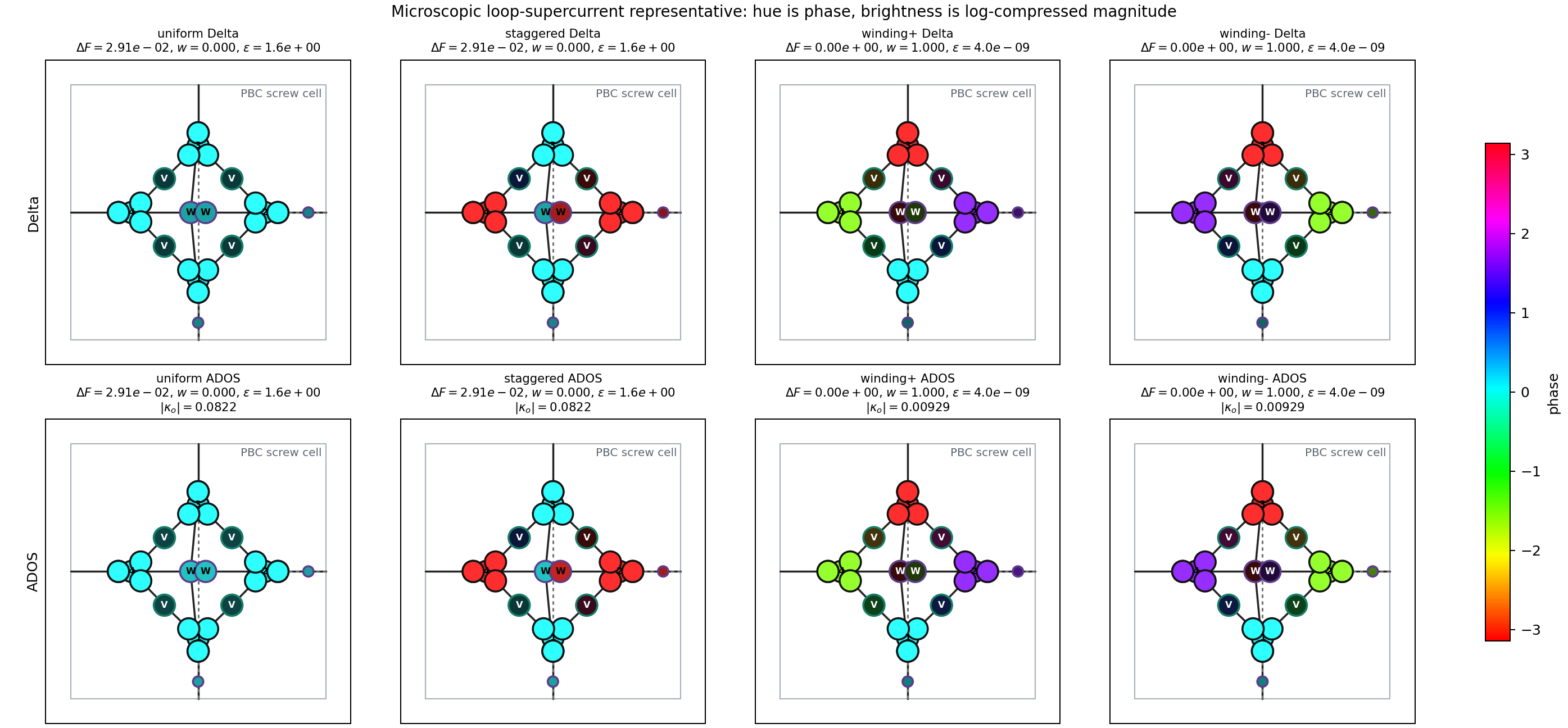
Figure 13.8: Soft-contact winding candidate. The (\Delta) and ADOS textures are plotted on the same projected C4-labelled screw-periodic Hamiltonian graph. The winding panels show the screw-ordered phases (0,\pi/2,\pi,3\pi/2), but this remains a mechanism diagnostic until all branches are compared at the same residual threshold.
But the strict follow-up is the important thesis result for compact models. Higher-accuracy screw-cell and full-HFB checks often leave the uniform or staggered branch lower, or collapse small onsite-Hubbard molecule/lattice routes into superconducting states with vanishingly small anomalous amplitude. The strongest released screw-cell winding branch is a near miss rather than a positive bulk result: the winding texture remains clean, but the best rows are still uniform-led by margins of order (5)–(7\times10^{-7}). The best compact winding candidates are therefore evidence for a real mechanism, not evidence for a robust tiny-molecule ground state. The later Josephson-island construction is introduced precisely to separate this amplitude problem from the phase-selection problem.
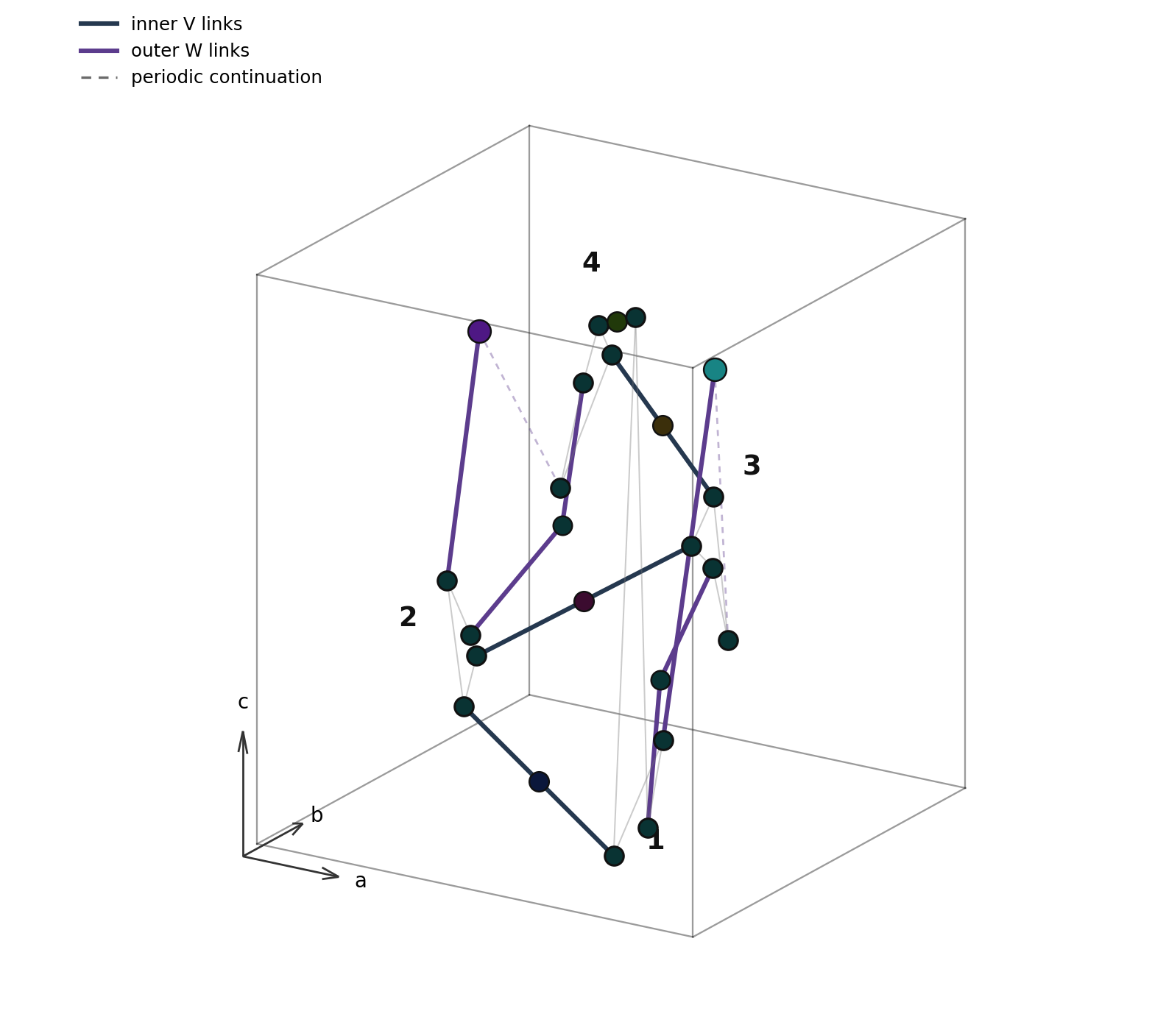
Figure 13.9: High-accuracy screw-cell winding diagnostic.
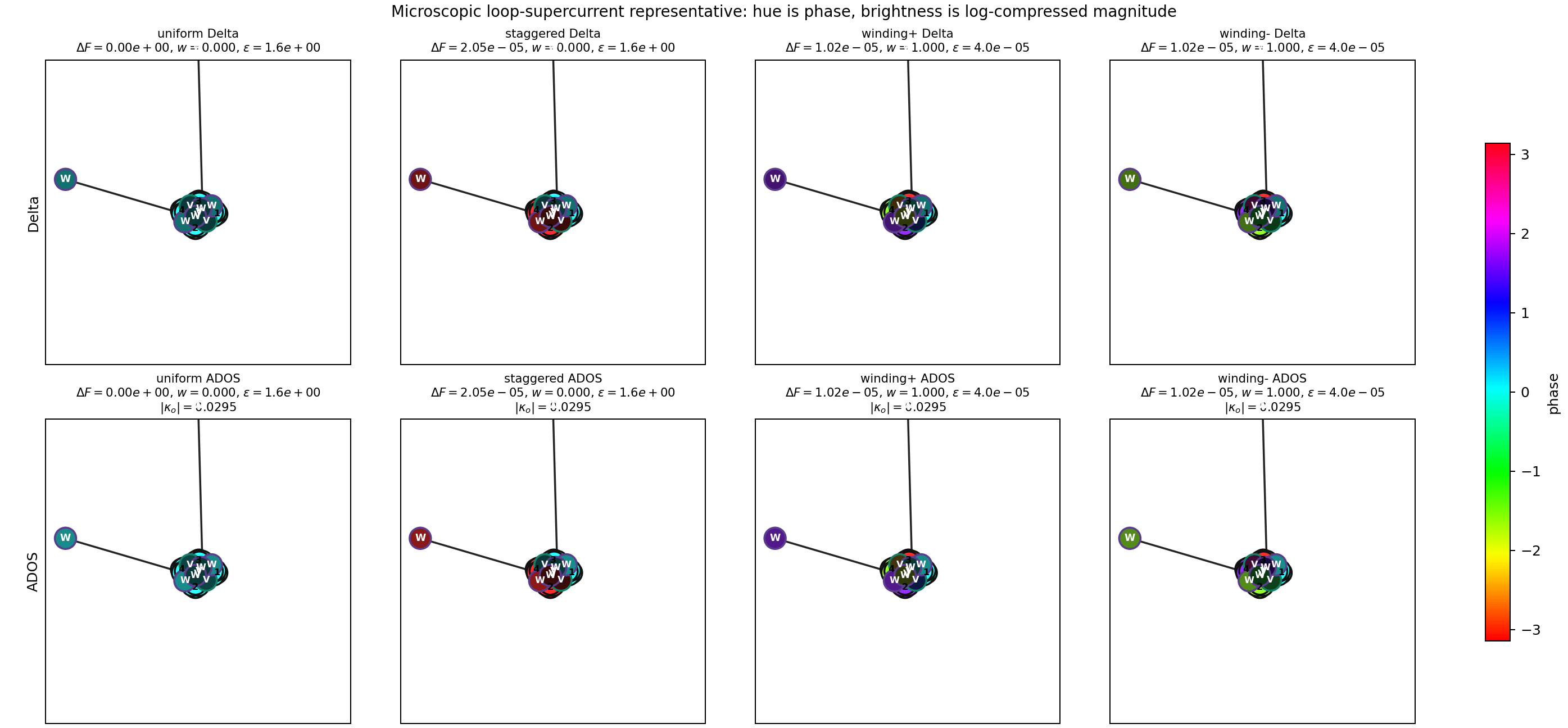
Figure 13.10: High-accuracy screw-cell best-branch diagnostic.
Model-Family Story
The QuLab loop-Josephson studies fill in the story between the compact mechanism above and the engineered Josephson-island device retained in this chapter. Their value is not that every geometry is a separate thesis result. Their value is that each family answers one physical objection.
The first objection is whether winding can ever be selected for a simple reason. The C3 molecule gives the cleanest yes. Three superconducting components coupled to a central costly region have a special winding identity: the phases (1,\omega,\omega^2) cancel at the centre, while the uniform state does not. In constrained mean-field language, winding removes anomalous density from the costly central site. This is the simplest demonstration that loop-supercurrent order can be a consequence of interference, not an arbitrary choice of complex phases.
Algebraically,
so a central anomalous amplitude proportional to the sum of the three outer phases vanishes for the two winding branches and remains finite for the uniform branch.
The second objection is whether that mechanism survives a stricter microscopic standard. The answer is mostly no for tiny onsite-Hubbard molecules. C3 molecules, C3 lattices, and C3 cluster-island variants keep producing useful winding diagnostics in constrained or pairing-only calculations, but full Hartree–Fock–Bogoliubov relaxation tends to Hartree-detune the attractive sites and collapse the superconducting amplitude. This negative result is important: it says that a few isolated negative-(U) orbitals are not a credible microscopic reservoir for the condensate. A signed C3 crystal-bath control now gives the corresponding positive small-model smoke: one attractive reservoir orbital per active site supplies amplitude, the central positive (U_C) site is updated by the same local self-consistency rule, and the tuned central-only benchmark selects the two degenerate winding seeds below the uniform seed. The result should be read as an existence check for the interference mechanism, not as a broad C3 phase diagram, because the selection depends on a node/antinode balance.
The third objection is whether the C3 mechanism generalizes to fourfold geometries. The C4 studies show why the answer is subtle. A single central site is no longer a unique winding selector, because both winding and staggered textures can node the centre. Worse, staggered order also naturally nodes the nearest-neighbour in-between paths. The baseline C4 molecule therefore teaches the main competitor: if the costly regions sit on inner adjacent paths, the system rewards staggered order rather than loop winding.
For four components the central sum can vanish for both ((1,i,-1,-i)) and ((1,-1,1,-1)). The split-centre/screw construction changes the penalty to diagonal channel sums such as (|e^{i\theta_0}+e^{i\theta_2}|^2+|e^{i\theta_1}+e^{i\theta_3}|^2), which removes part of the staggered advantage and makes winding a meaningful competitor again.
The fourth objection is whether C4 winding can be rescued by geometry. The best answer is the split-centre or balanced screw construction. Instead of one shared central costly region, the normal paths are separated along diagonal or outside channels. Winding can then node the diagonal paths more selectively, while staggered order no longer receives all the savings. In constrained branch scans this produces broad winding pockets, and odd outside-channel lengths preserve the advantage better than even ones. The same caveat remains: isolated onsite-Hubbard full-HFB checks still relax toward nearly normal or nonwinding solutions. The geometry solves the phase-selection problem, while the later bath simulations solve the missing amplitude-support problem in a controlled reservoir prototype.
The fifth objection is whether the negative isolated-molecule result kills the whole program. It does not. It redirects it. The proximity-film and signed crystal-bath studies separate two questions that the tiny molecules mixed together: where does the superconducting amplitude come from, and which phase texture does the loop geometry select? When a film or pair-susceptible bath supplies the amplitude, the balanced C4 phase selector can produce winding minima. The bath simulations make this microscopic-adjacent rather than only phenomenological: screened signed onsite HFG runs with reservoir orbitals keep finite active and bath amplitude while selecting the winding pair in tuned C4 and C3 prototypes.
The latest microscopic follow-up sharpens rather than overturns this boundary. Softer tube/channel continuations can reduce the winding stiffness enough to make the winding branch slightly lower in energy, but only after the winding anomalous amplitude has collapsed to about (10^{-6}). That is not a recovered finite-amplitude microscopic loop-supercurrent state. The balanced-screw hybrid cluster/channel follow-up adds an explicit Hartree reference while still relaxing the HFG densities. Its supplied-amplitude selector is strongly winding-led, but strict refined HFB rows again sit on the amplitude-starved boundary, with accepted (|\Delta_A|\sim10^{-5})–(10^{-4}). By contrast, a tuned balanced-screw finite-film promotion keeps finite supplied amplitude, (|\Delta_{\rm film}|\simeq0.19), and gives a very small winding advantage, (\Omega_{\rm wind}-\Omega_{\rm nonwind}\simeq-4.1\times10^{-7}), at residual below (5\times10^{-7}). A simple periodic anomalous-self-energy bath remains uniform-led in the sampled grid, but the later explicit crystal-bath runs are different: the bath has its own attractive/pair-susceptible degrees of freedom and is updated in the same local HFG loop. Thus the viable microscopic-adjacent route is not more compact clustering or Hartree referencing by itself, but reservoir-supported channel geometry in which stiffness, Hartree compensation, and amplitude support are controlled together.
The final strict device step is the promoted long-soft Josephson-island geometry. It keeps all hoppings real and imposes no external flux or Peierls phase, then compares uniform, staggered, winding (+), and winding (-) seeds at the same Hartree–Fock–Gor’kov residual threshold. For the accepted point, the two winding branches are degenerate time-reversed partners and lie below the best nonwinding branch by about (-2.386\times10^{-3}). This is a strict tuned finite-device existence result, not a broad phase diagram or a claim that compact molecules were already sufficient.
The sixth objection is materials relevance. The LaNiX2 loop-current branch remains a context and constraint, not a solved material model. It keeps the loop-supercurrent route connected to the same TRSB materials motivation as the INT chapter, but the microscopic evidence points away from claiming that a minimal onsite-Hubbard molecule directly explains LaNiC2 or LaNiGa2. The credible claim is more general: multicomponent superconductors can break time reversal by loop-current ordering, and the microscopic calculation tells us which realizations are too weak and which engineered environments are worth pursuing.
| Model family | Figure evidence | Thesis verdict |
|---|---|---|
| C3 molecule | Selection-rule, production-HFB diagnostics, signed crystal-bath smoke, and central-only robustness scan | Cleanest interference demonstration. The compact molecule is not a robust condensate after full relaxation, but adding a pair-susceptible reservoir band gives a positive converged finite-winding smoke. The tuned central-only version shows the expected parameter sensitivity of an interference-selected node. |
| C3 lattice/cluster | Recovery scans and unrestricted chirality checks | Negative controls: constrained winding survives, but density-relaxed superconductivity is not recovered. |
| C4 molecule | Selection-rule, outside-junction, and production-HFB diagnostics | Reveals the staggered competitor and explains why central-node savings do not automatically select winding. |
| Balanced C4 cluster | Branch, parity, and HFB stability checks | Geometry can favour winding in constrained scans, especially for odd outside paths, while unrestricted onsite-Hubbard checks remain conservative. |
| C4 signed crystal bath | Split-centre/opposite-channel bath-band scans, screened Hartree, and Fock controls | Positive tuned reservoir prototype: pair-susceptible bath orbitals compensate the Hartree amplitude loss and preserve finite-amplitude winding rows under signed onsite HFG. |
| Hartree-referenced hybrid cluster | Supplied-amplitude scan and strict long-iteration HFB refinement | The balanced-screw selector survives, but accepted winding-led rows have only ( |
| C4 screw/crystal | Central-versus-screw and unrestricted checks | Screw geometry improves the selector but is not by itself a settled full-HFB ground state. |
| Tube/channel continuations | Tuned C3 tube and soft-channel follow-up | Lowering stiffness can invert the branch energy only in amplitude-starved rows, so tubes are a boundary diagnostic rather than a finite-amplitude positive route. |
| Proximity film | C3/C4 selection, energy decomposition, film-thickness phase maps, and finite-film promotion | Separating condensate supply from phase selection keeps the loop mechanism viable; the balanced-screw finite film gives a narrow supplied-amplitude winding candidate. |
| LaNiX2 loop-current bridge | Symmetry, cancellation, and pair-channel scores | Keeps the materials motivation visible without claiming a solved LaNiX2 loop-current model. |
| Josephson-island device | Strict four-branch HFG free-energy comparison, ADOS textures, current and magnetic diagnostics | Positive tuned finite-device HFG evidence for spontaneous winding selection without imposed flux; robustness and scale-up remain open. |
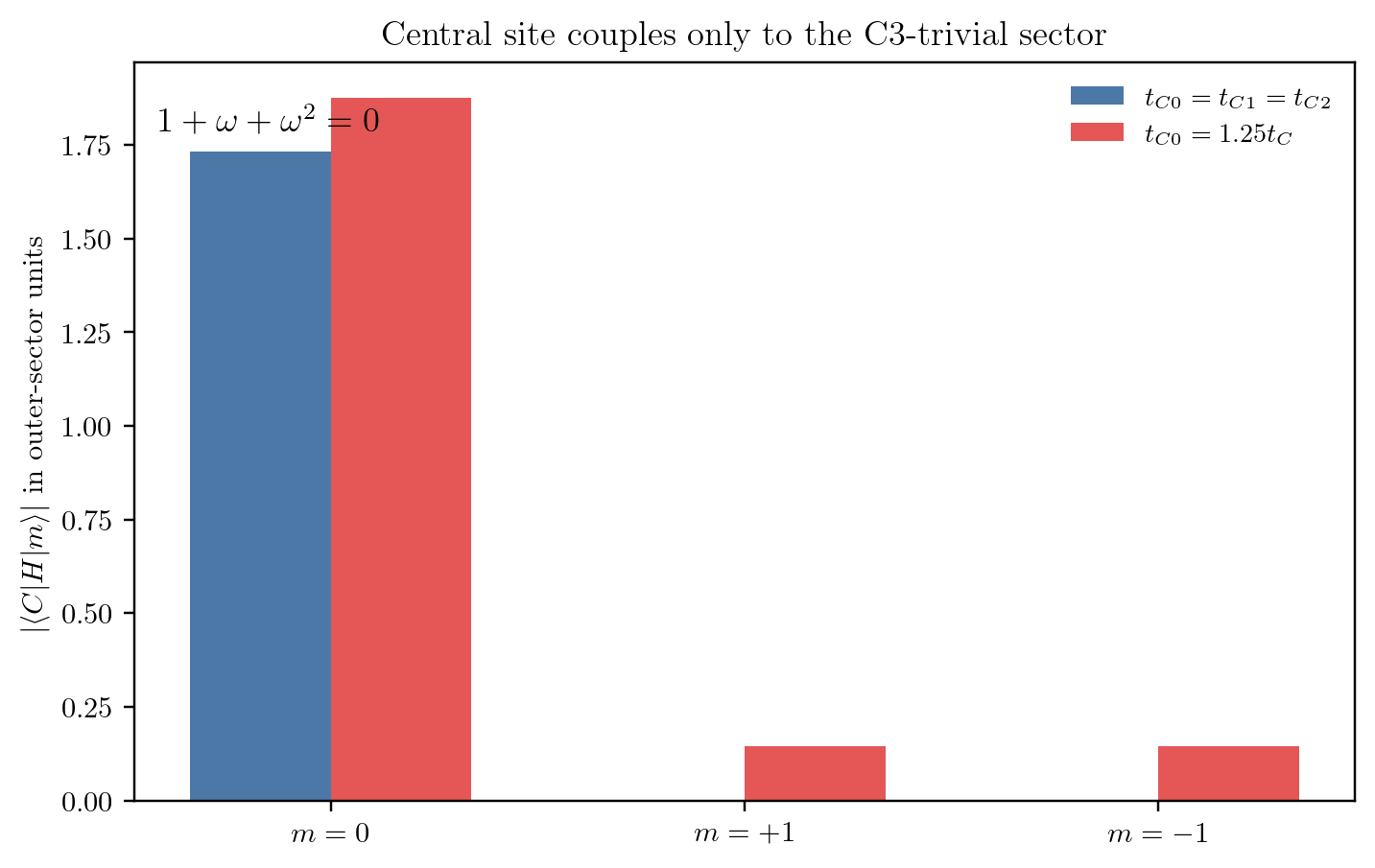
Figure 13.11: C3 molecule selection rule: winding cancels anomalous density at the costly centre while the uniform branch does not.
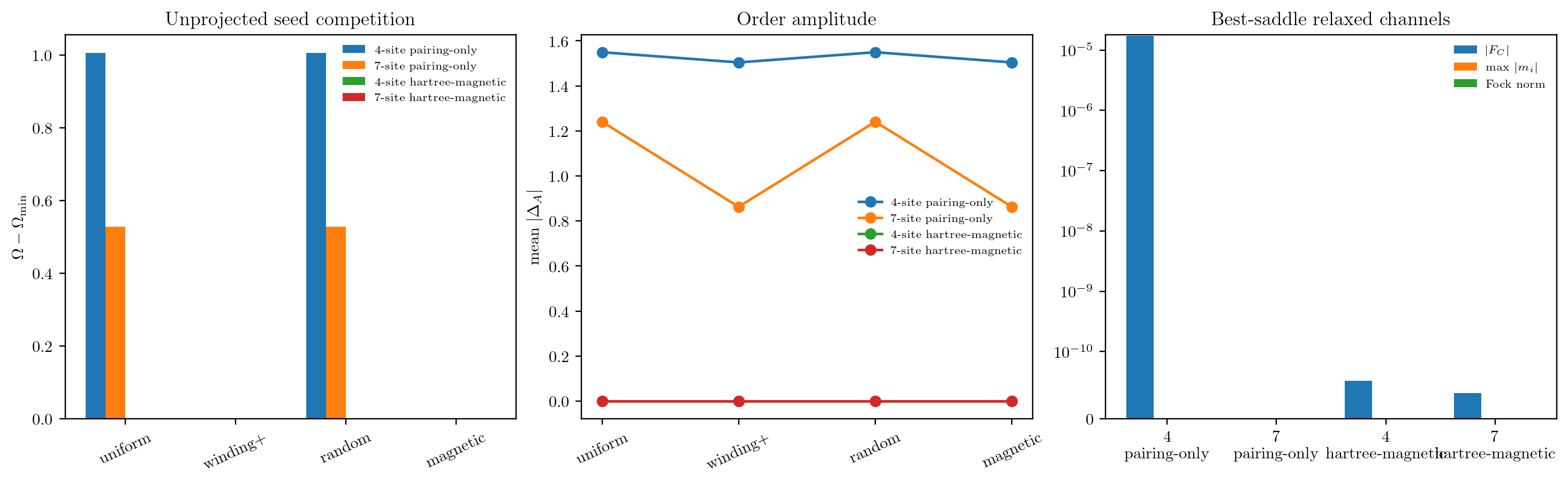
Figure 13.12: Production HFB diagnostics for the C3 molecule, showing why the clean interference rule is constrained by self-consistent amplitude formation.
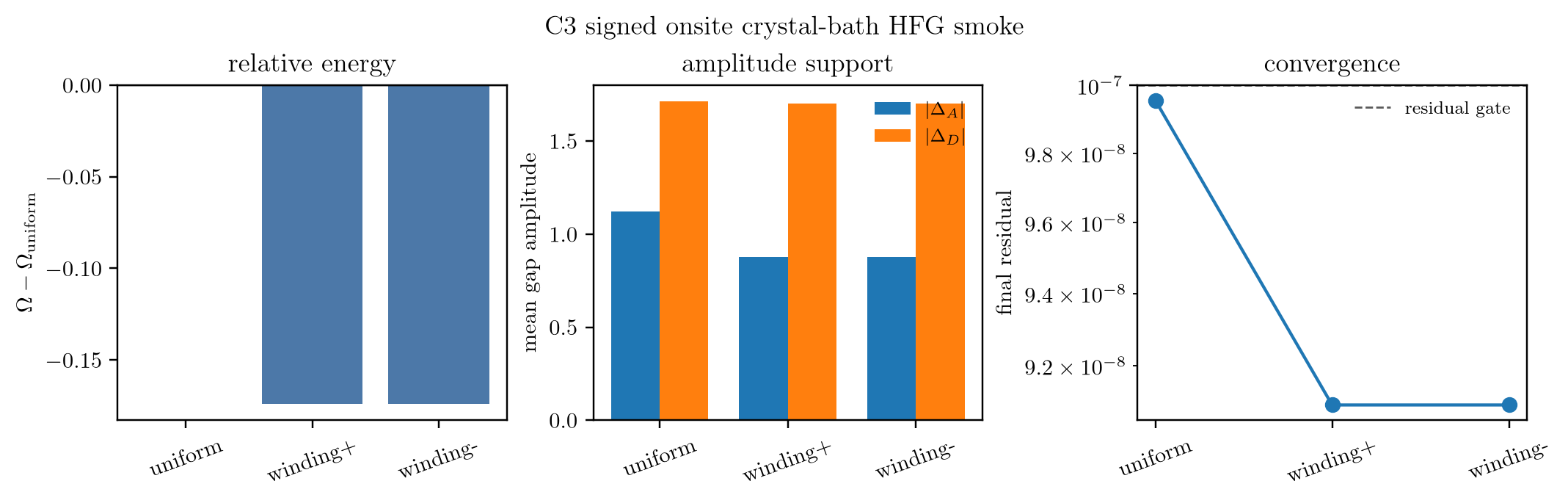
Figure 13.13: C3 signed onsite crystal-bath HFG smoke. One attractive dispersive reservoir orbital per active site supplies amplitude, while the centre and optional edge sites remain positive-(U) selectors updated by the same local rule (\Delta_i=-U_iF_i). The representative two-(k_z)-point run selects the two degenerate winding seeds over the uniform seed with finite active and bath amplitudes. This is a small-model existence smoke, not yet a C3 phase diagram.
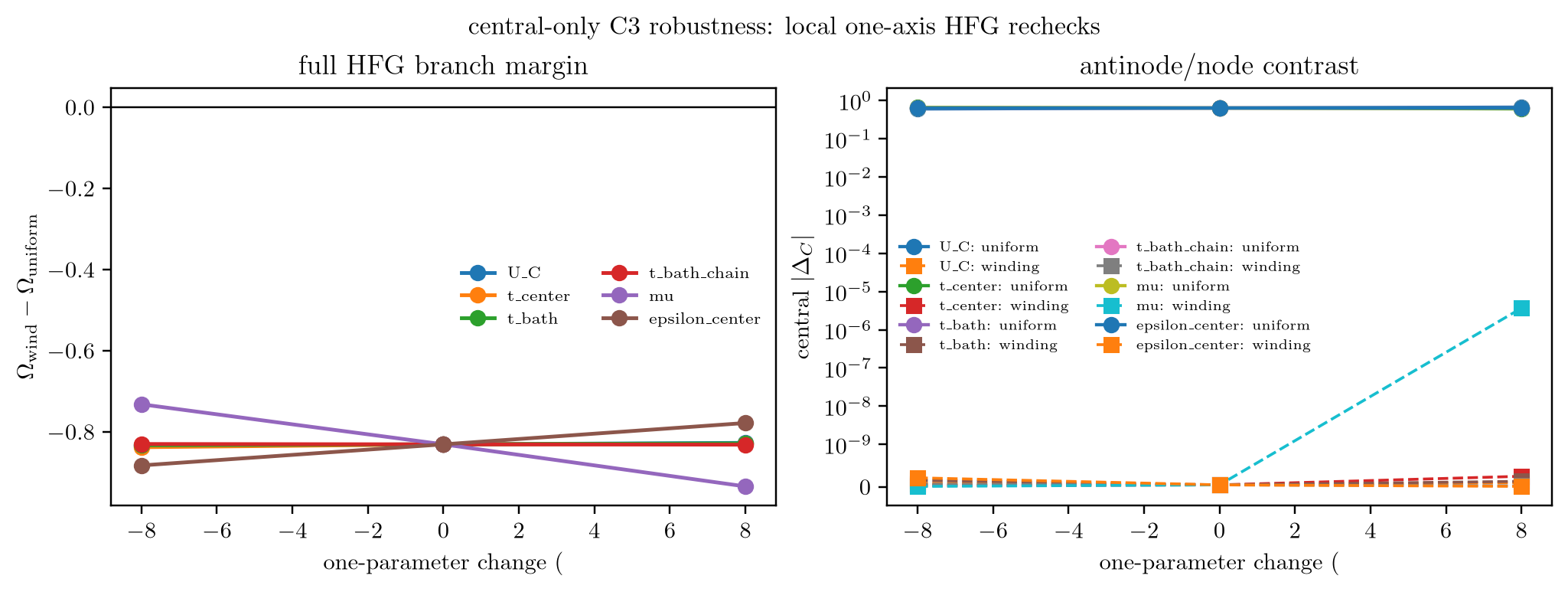
Figure 13.14: C3 central-only crystal-bath robustness. One-parameter perturbations around the tuned central-only reference are rechecked with full signed onsite HFG branch competition. The window is intentionally local: in the stored (\pm8%) scan, (17/18) rows pass the strict selected-winding gate, while the (+8%) chemical-potential row keeps a negative winding margin but misses the residual criterion.
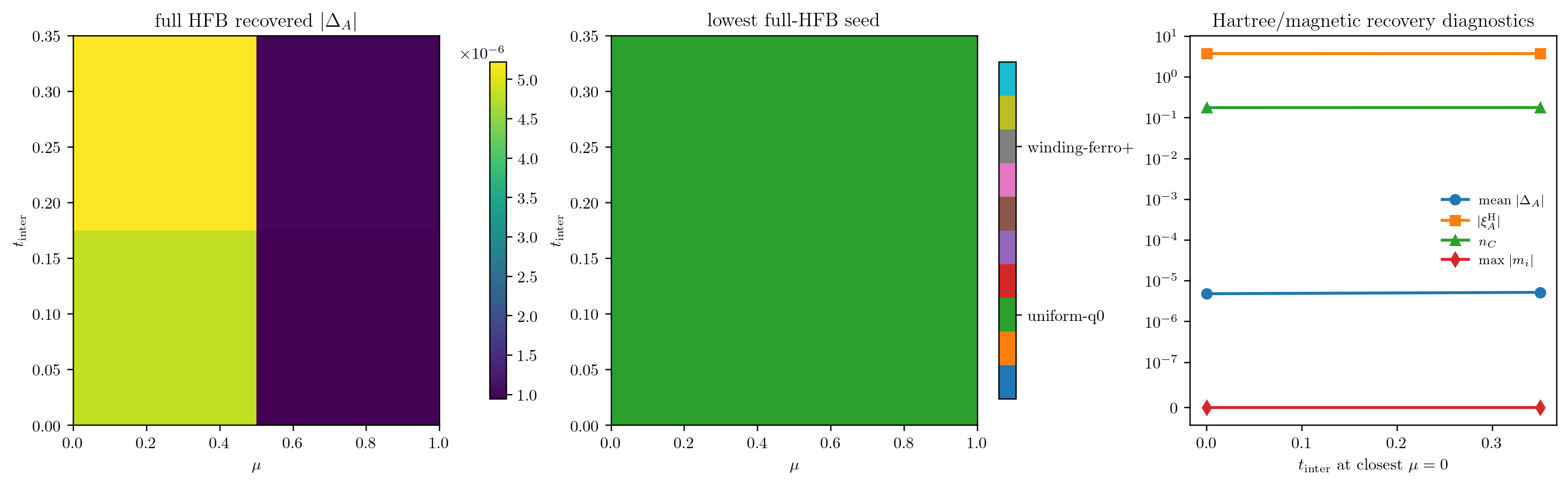
Figure 13.15: C3 lattice production-HFB recovery scan, a negative control showing that constrained winding diagnostics do not by themselves restore robust density-relaxed superconductivity.
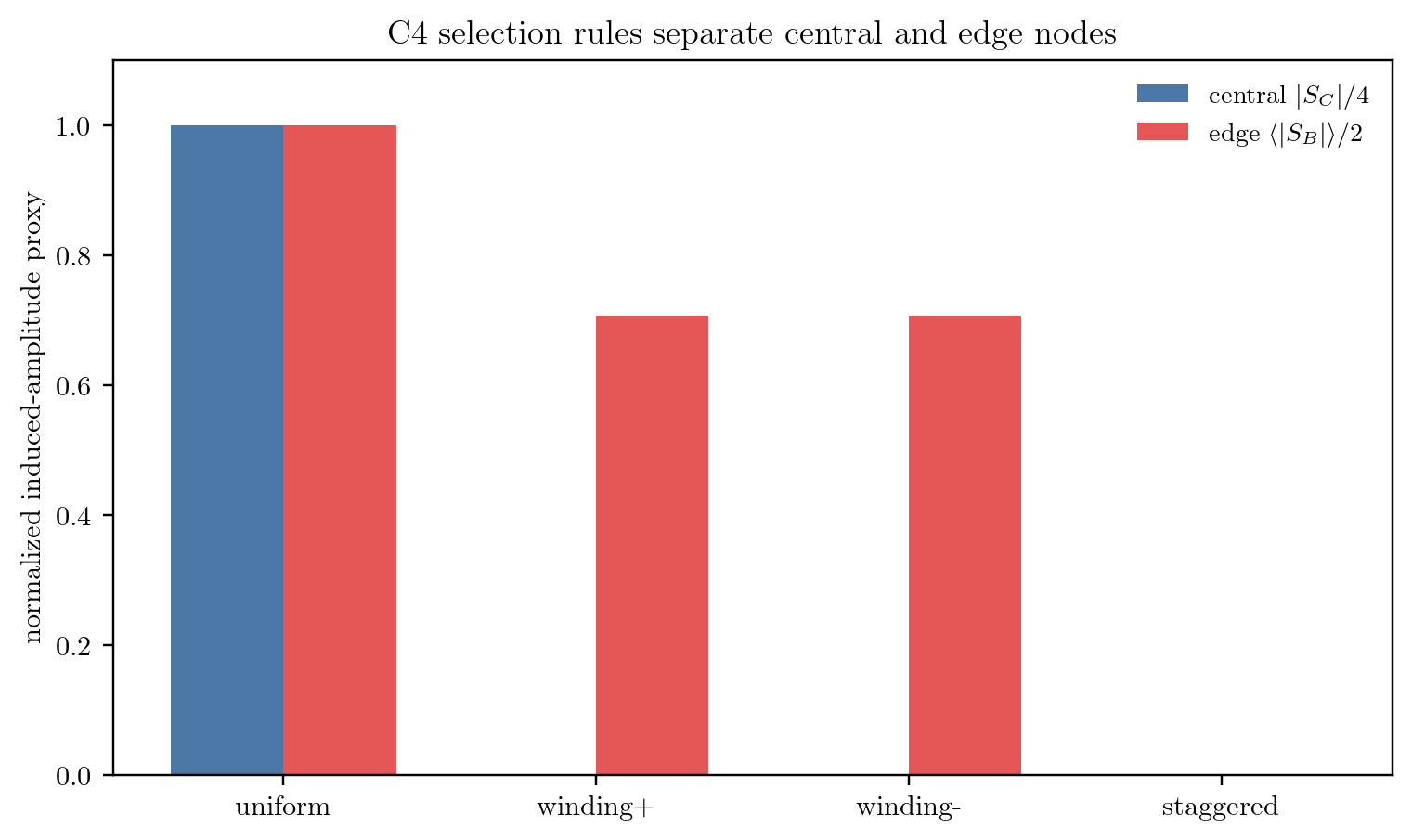
Figure 13.16: C4 molecule selection rules. A single central costly site is not a unique winding selector: both winding ((1,i,-1,-i)) and staggered ((1,-1,1,-1)) phase patterns can cancel the central sum, while staggered order also suppresses inner adjacent-path amplitudes without carrying loop chirality.
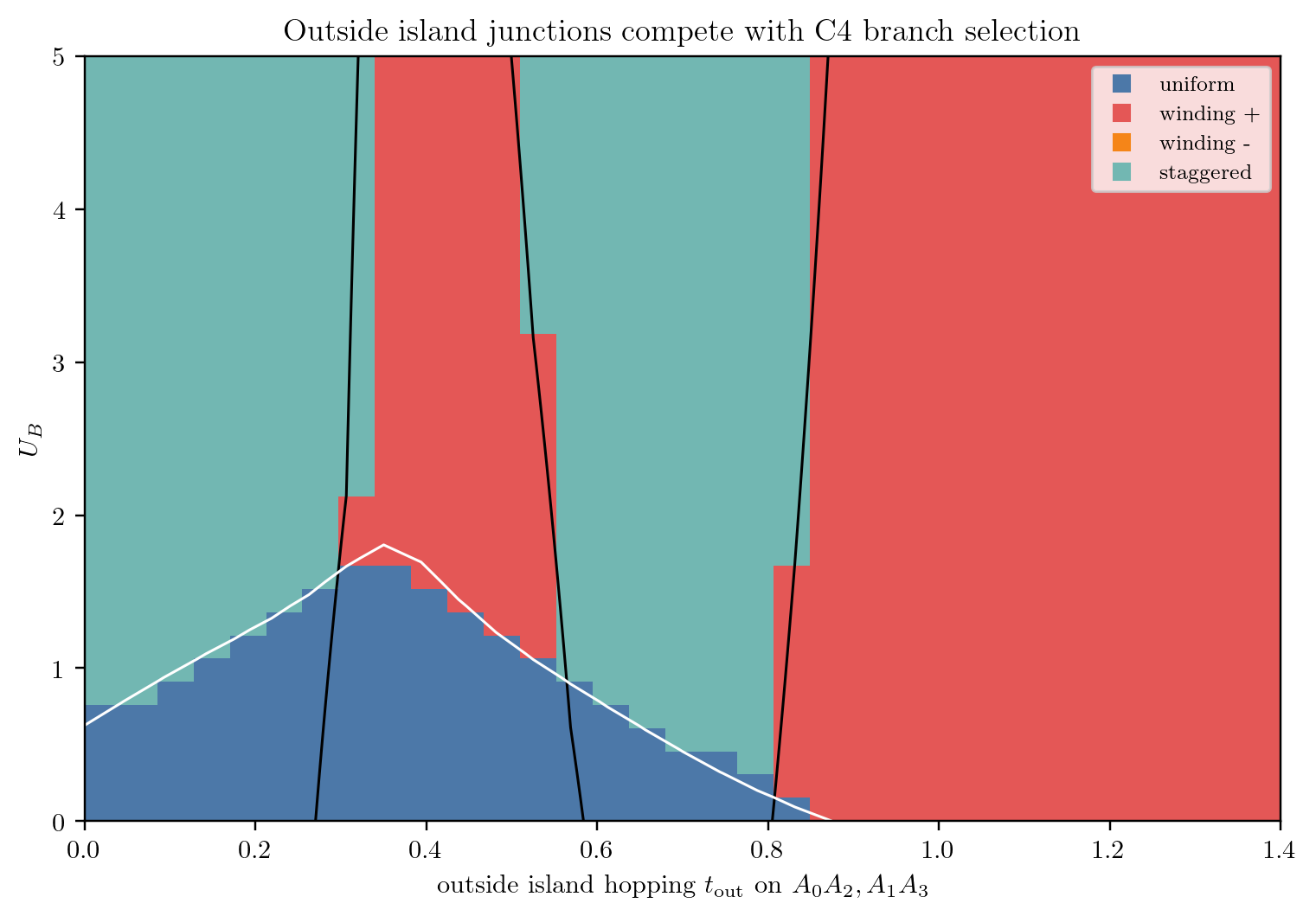
Figure 13.17: C4 outside-junction competition. Moving the costly paths away from one shared centre changes the balance between winding and staggered branches, showing that fourfold winding selection depends on where the normal channels couple to the four superconducting components.
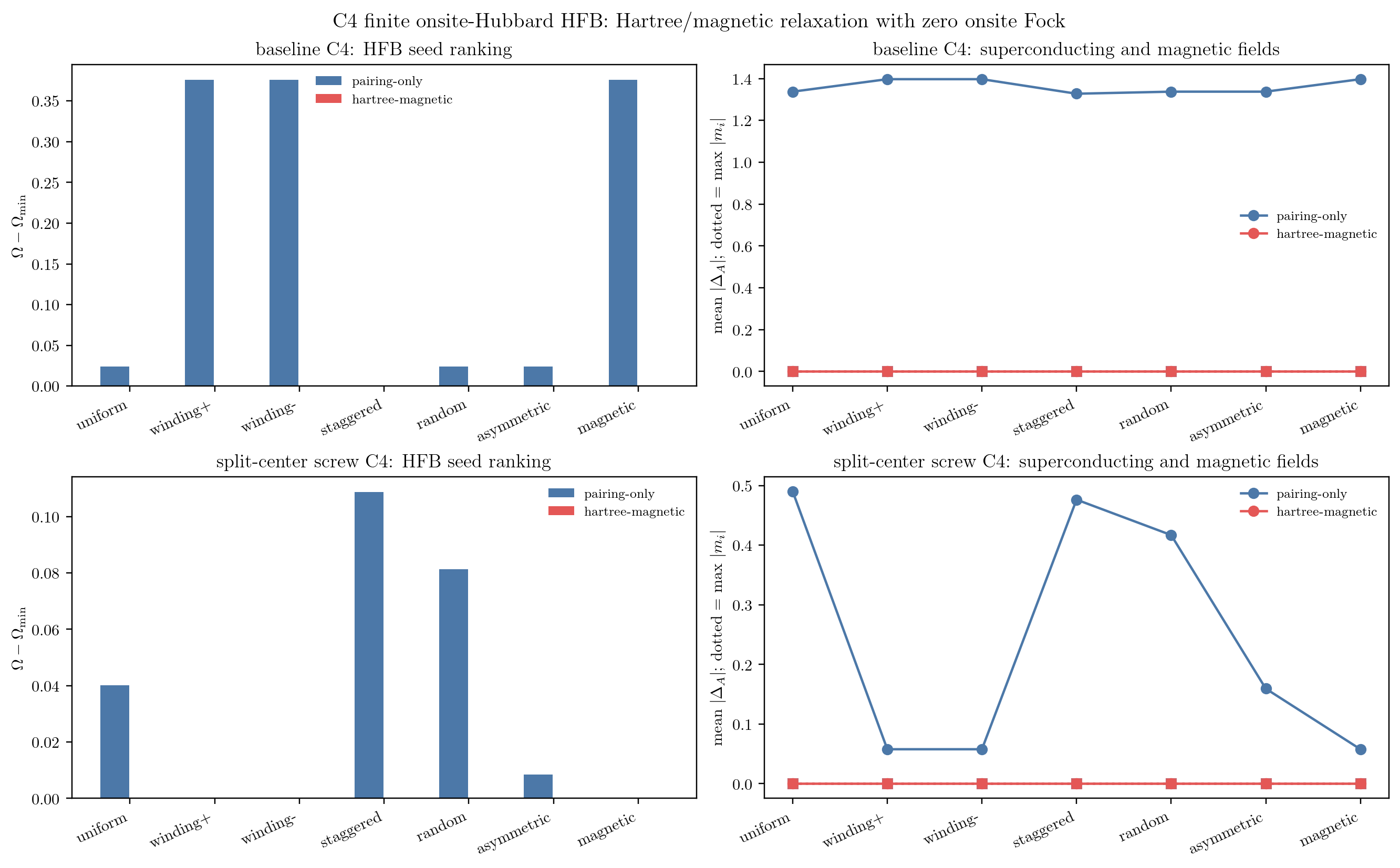
Figure 13.18: C4 molecule production-HFB diagnostics bounding the pairing-only C4 winding result.
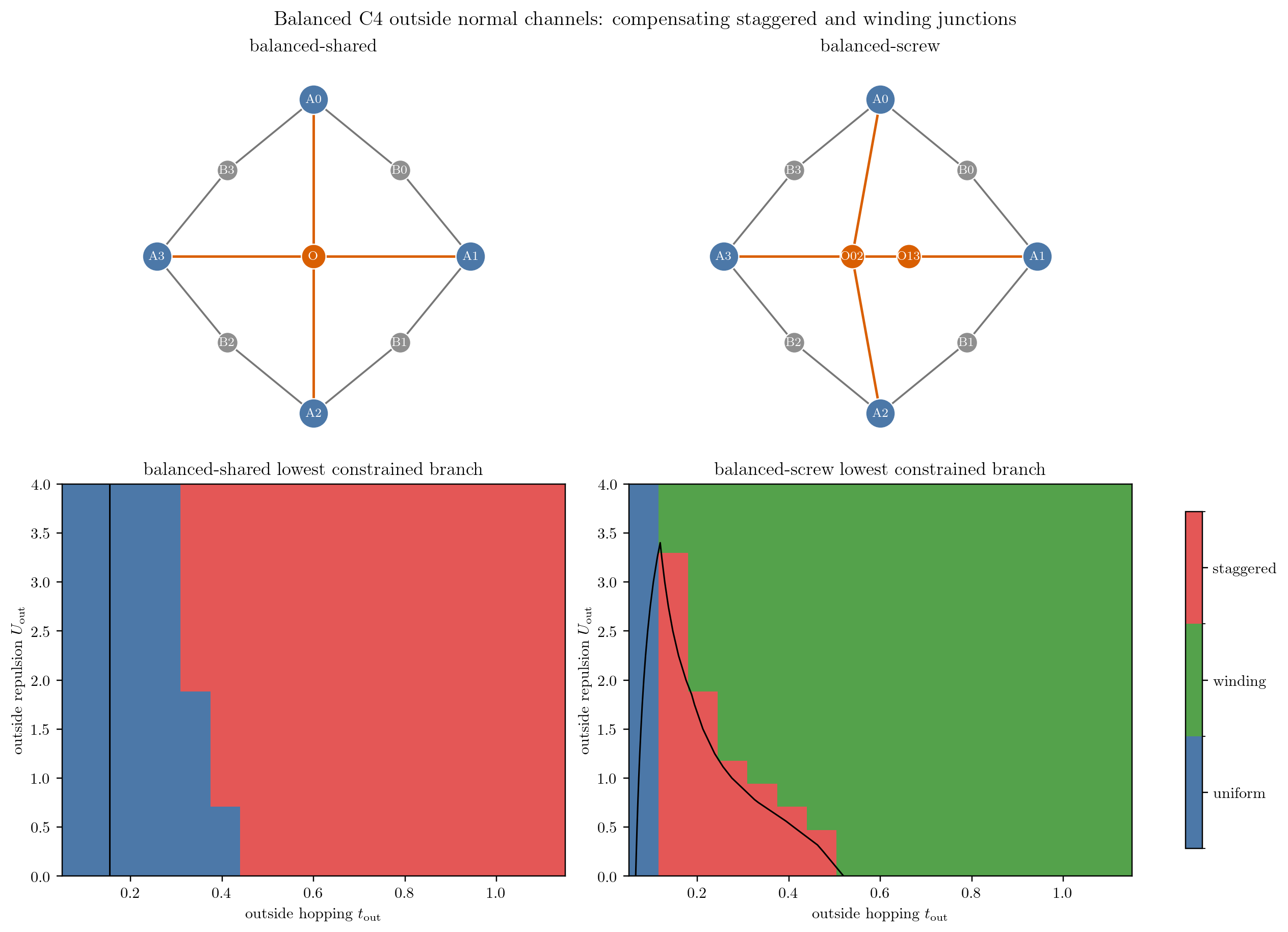
Figure 13.19: Balanced outside-channel C4 cluster branch scan identifying where winding pockets can appear.
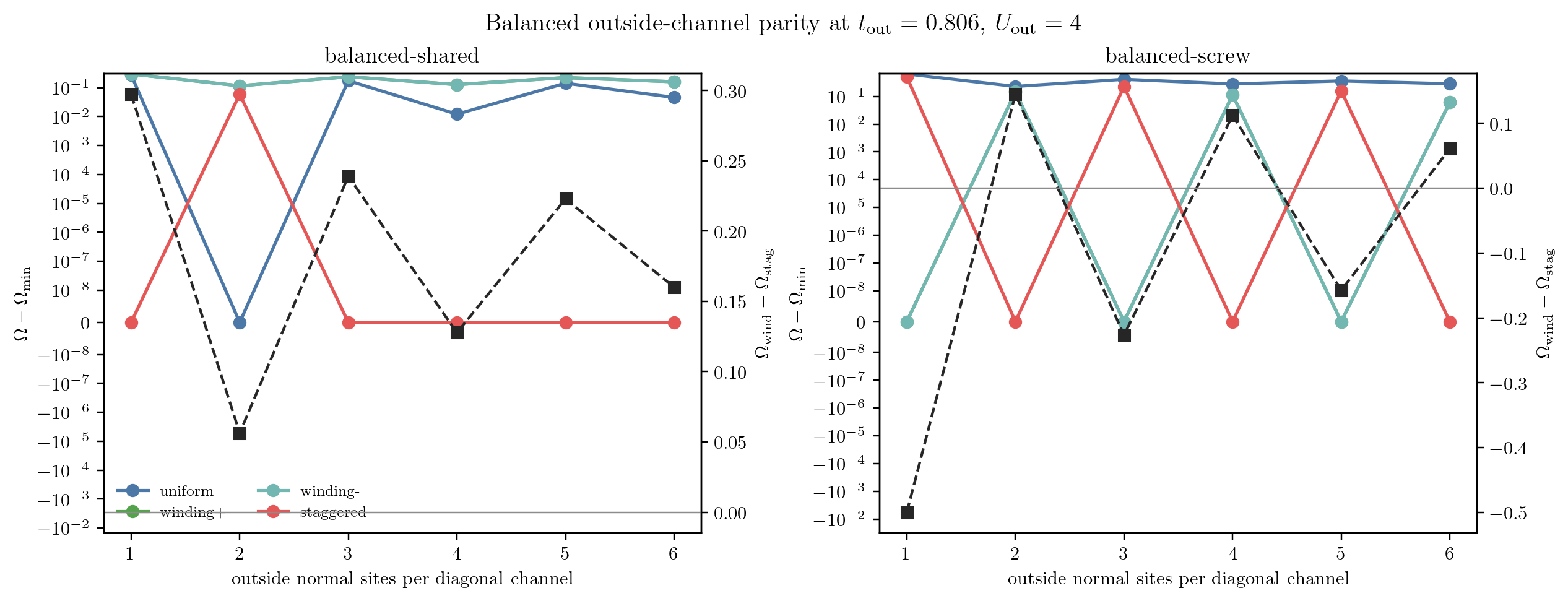
Figure 13.20: Balanced outside-channel parity scan showing the odd/even path-length effect in the C4 selector.
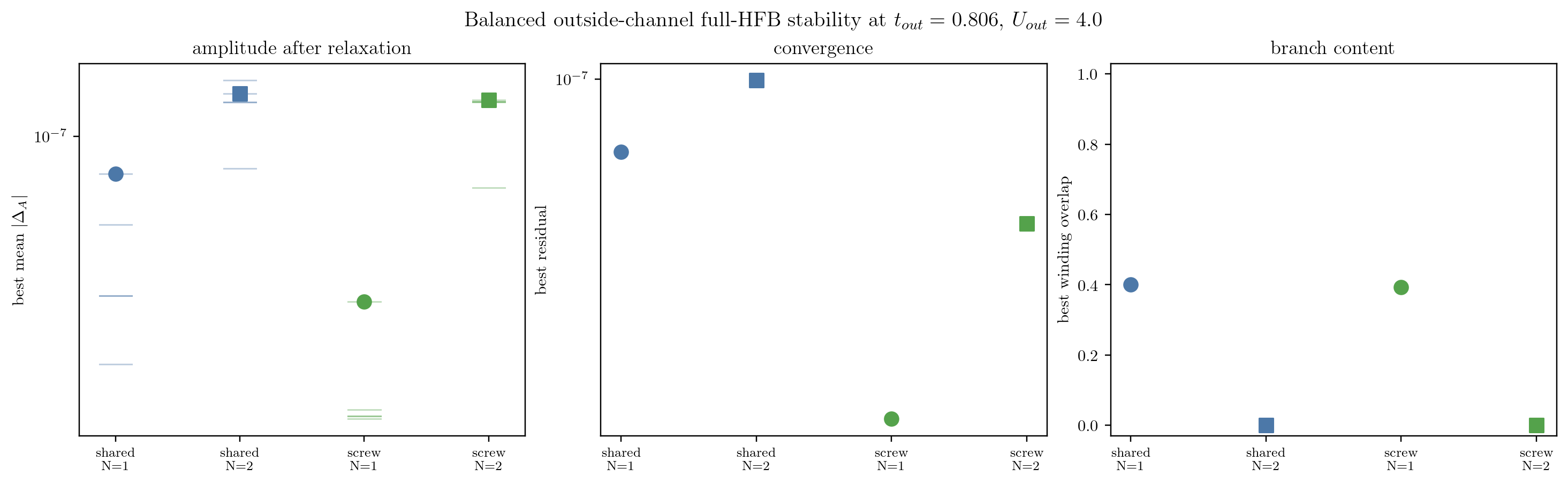
Figure 13.21: Balanced outside-channel C4 HFB stability check bounding the constrained winding result.
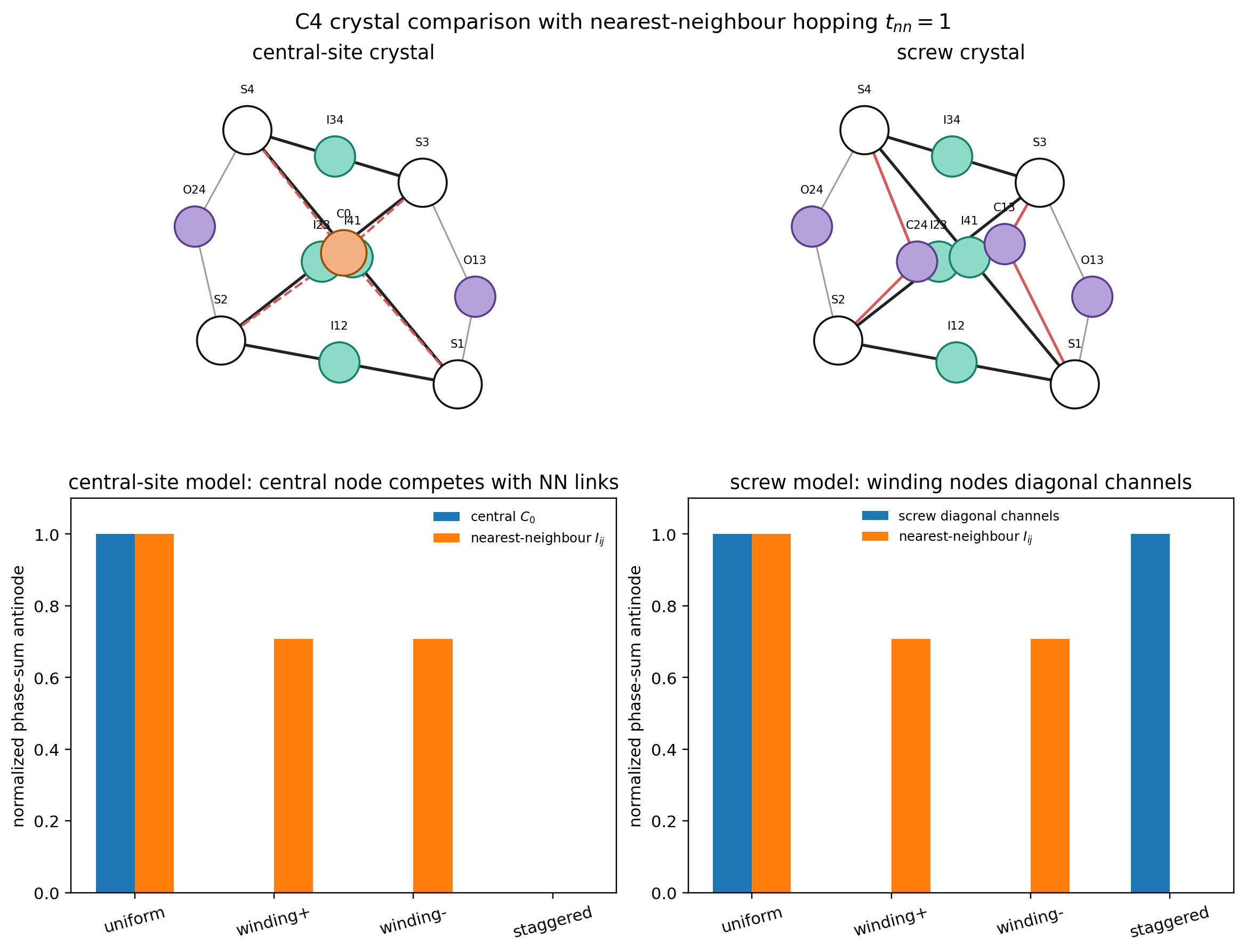
Figure 13.22: C4 model-crystal central-versus-screw nearest-neighbour hopping comparison. The central-site model tests one shared C4-symmetric penalty, while the screw model separates that penalty into diagonal normal channels related by a (C_4) screw operation; this helps winding node the screw channels selectively and removes part of the staggered competitor’s advantage. This is a toy geometry, not the crystal symmetry of LaNiC2 or LaNiGa2.
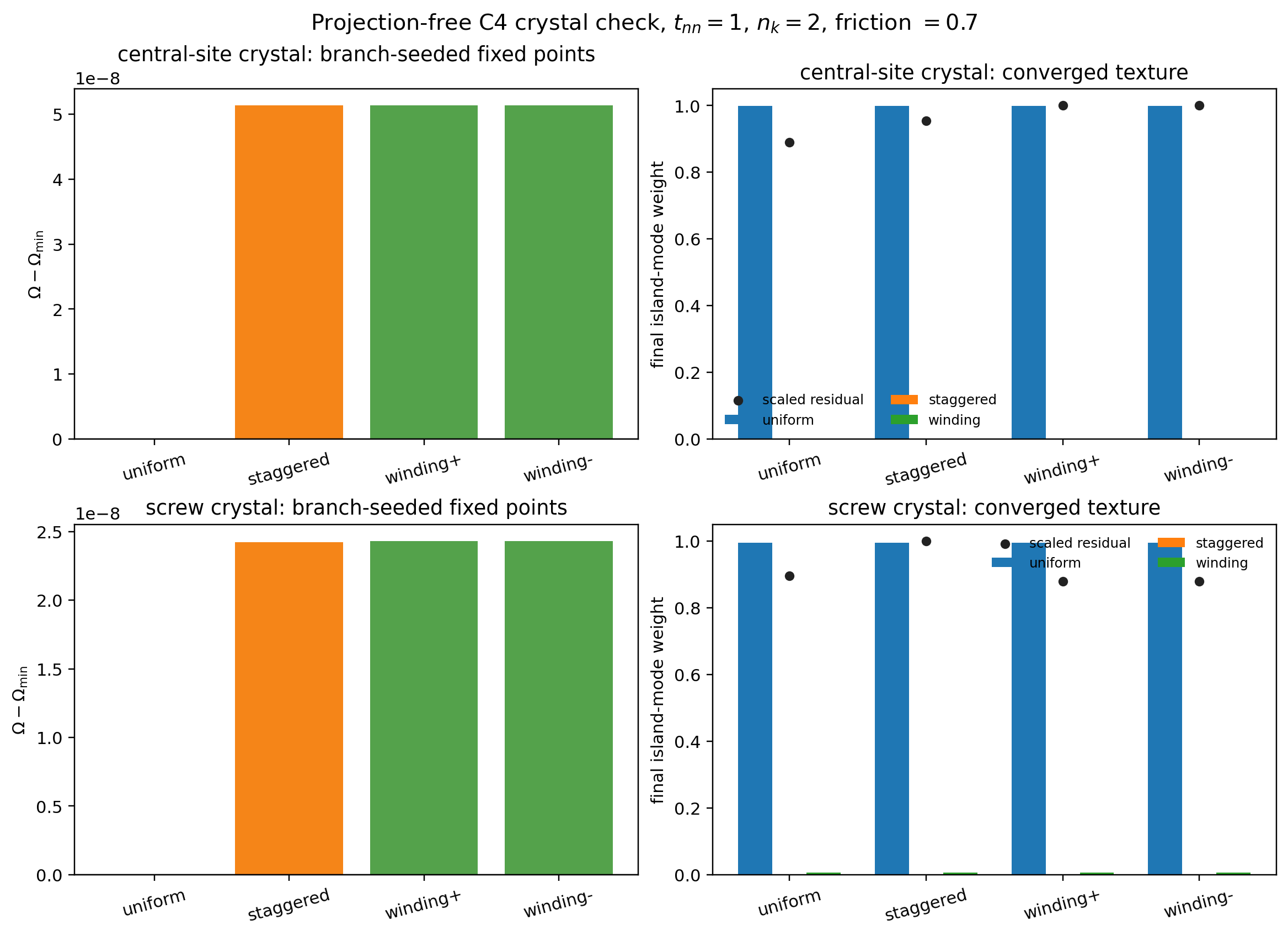
Figure 13.23: Unrestricted C4 crystal nearest-neighbour hopping check, retained as a conservative bound on the screw-geometry claim. The screw geometry is a channel-separation diagnostic rather than a standalone proof of a robust bulk winding ground state.
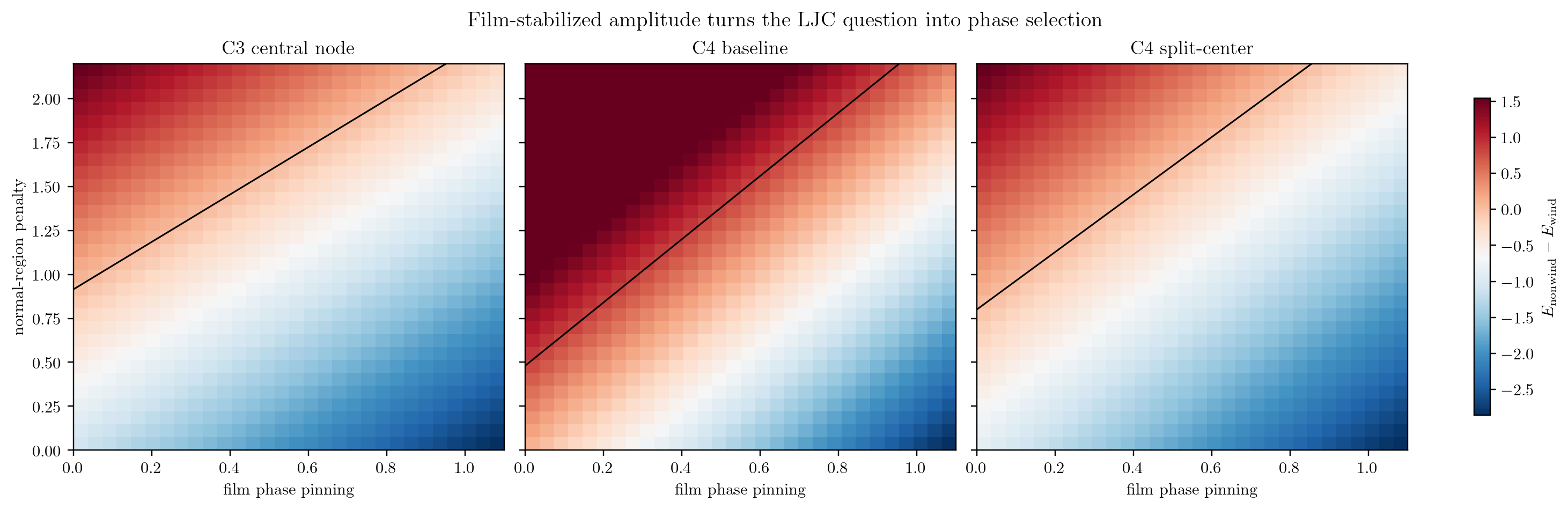
Figure 13.24: Proximity-film C3/C4 selection summary, separating phase selection from condensate formation.
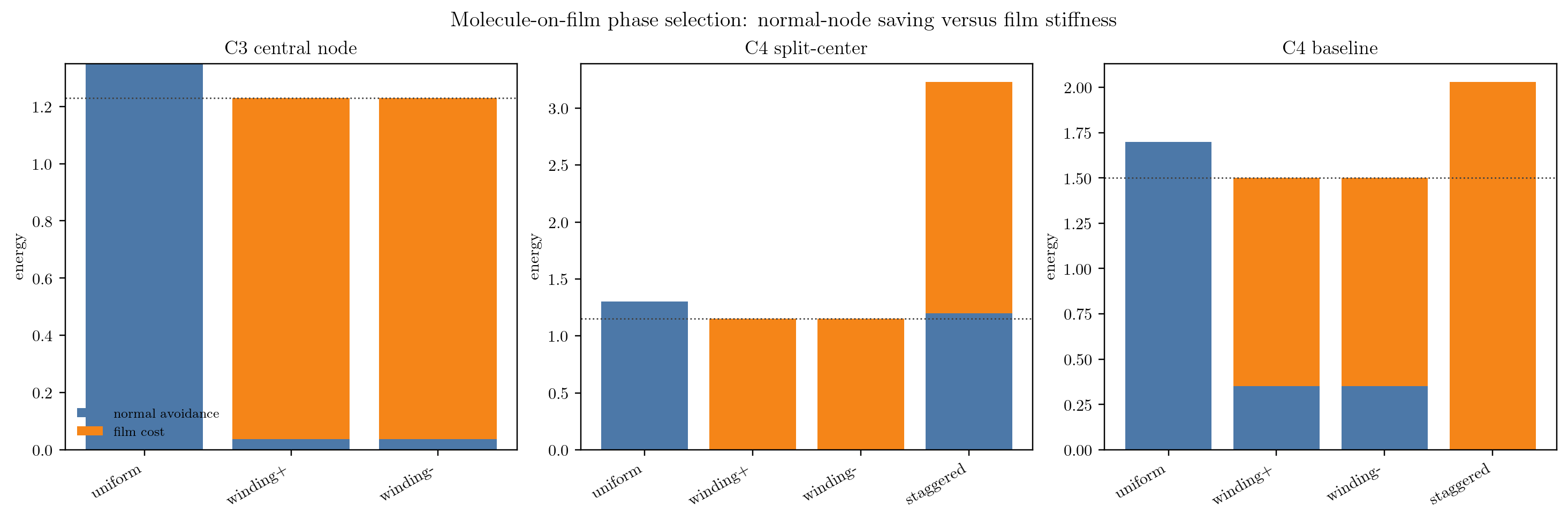
Figure 13.25: Proximity-film branch-energy decomposition showing how supplied amplitude and phase selection are separated.
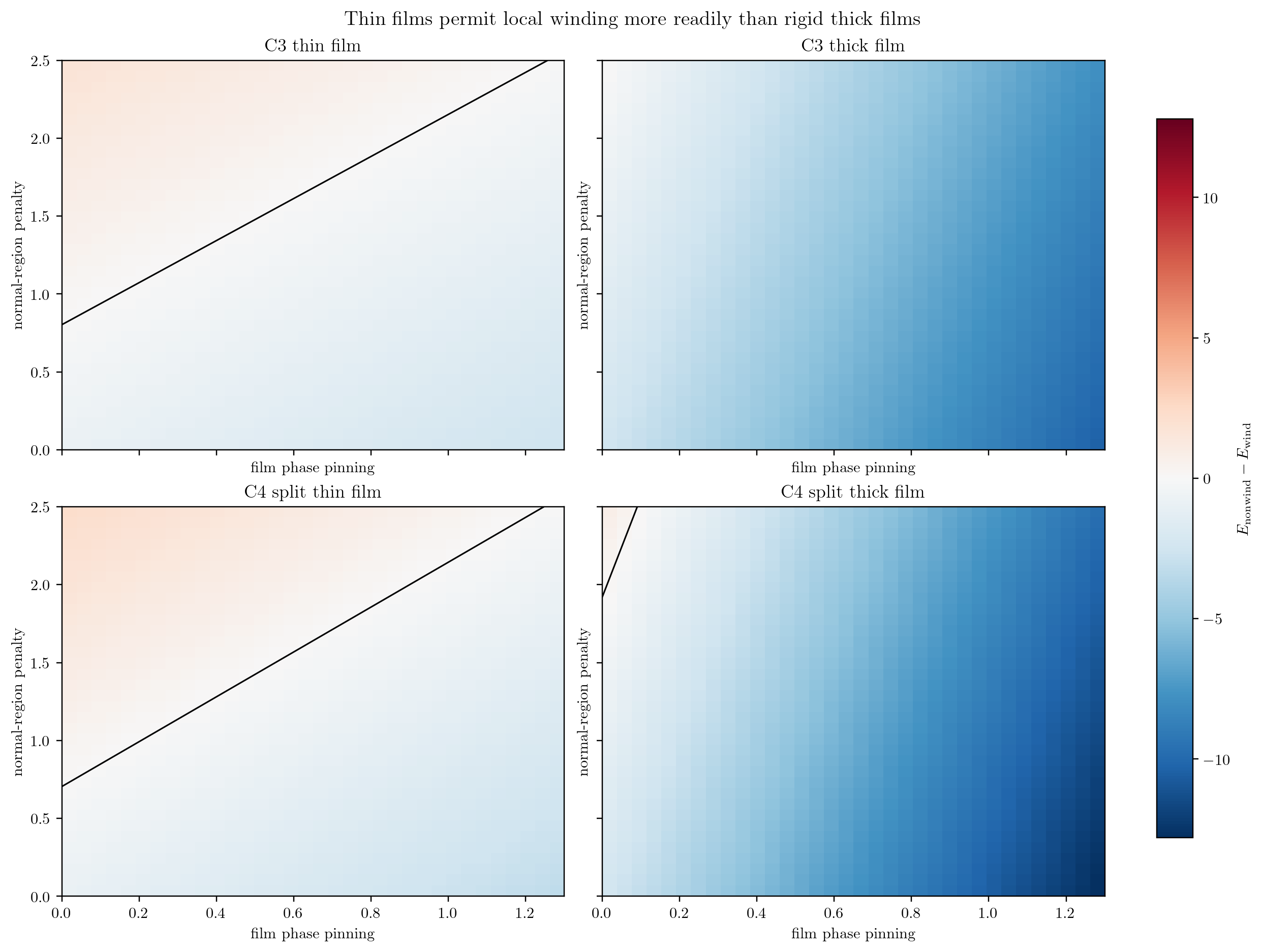
Figure 13.26: Thin- and thick-film proximity phase maps for the supplied-amplitude loop selector.
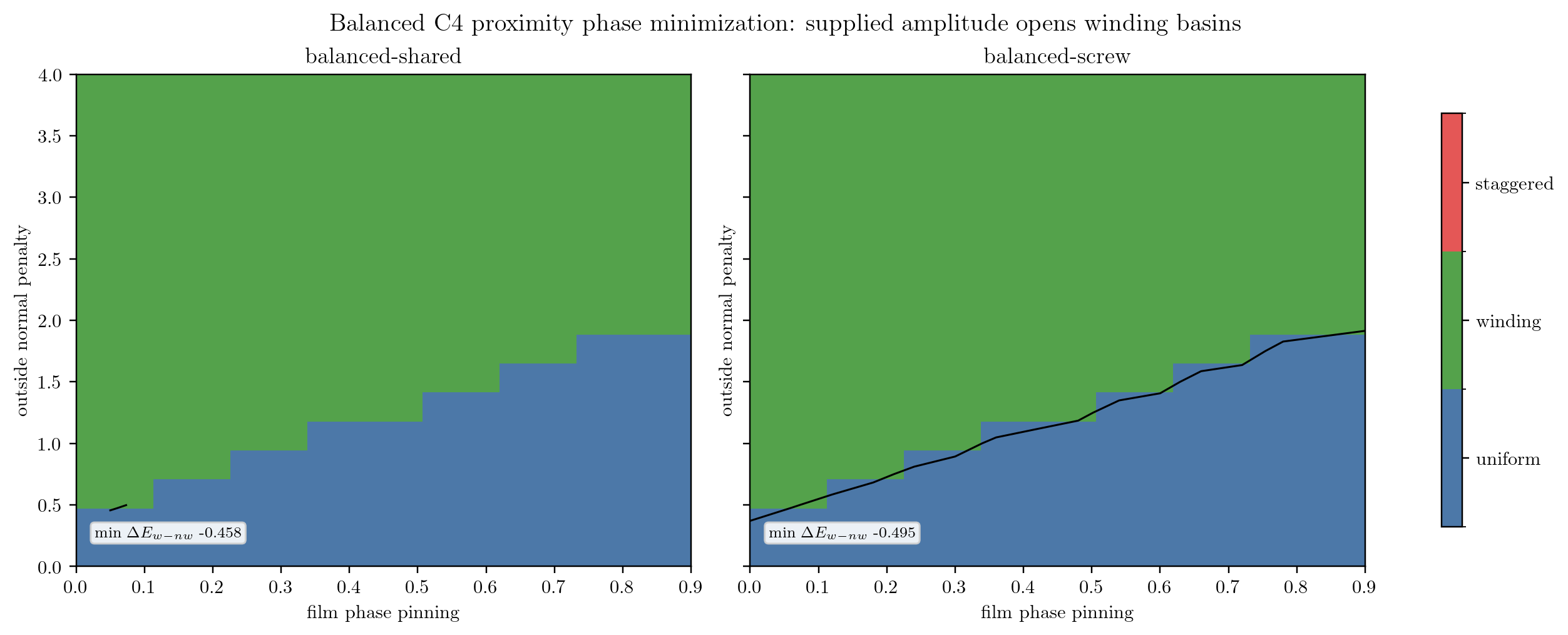
Figure 13.27: Balanced C4 proximity-film phase minimization showing broad supplied-amplitude winding windows.
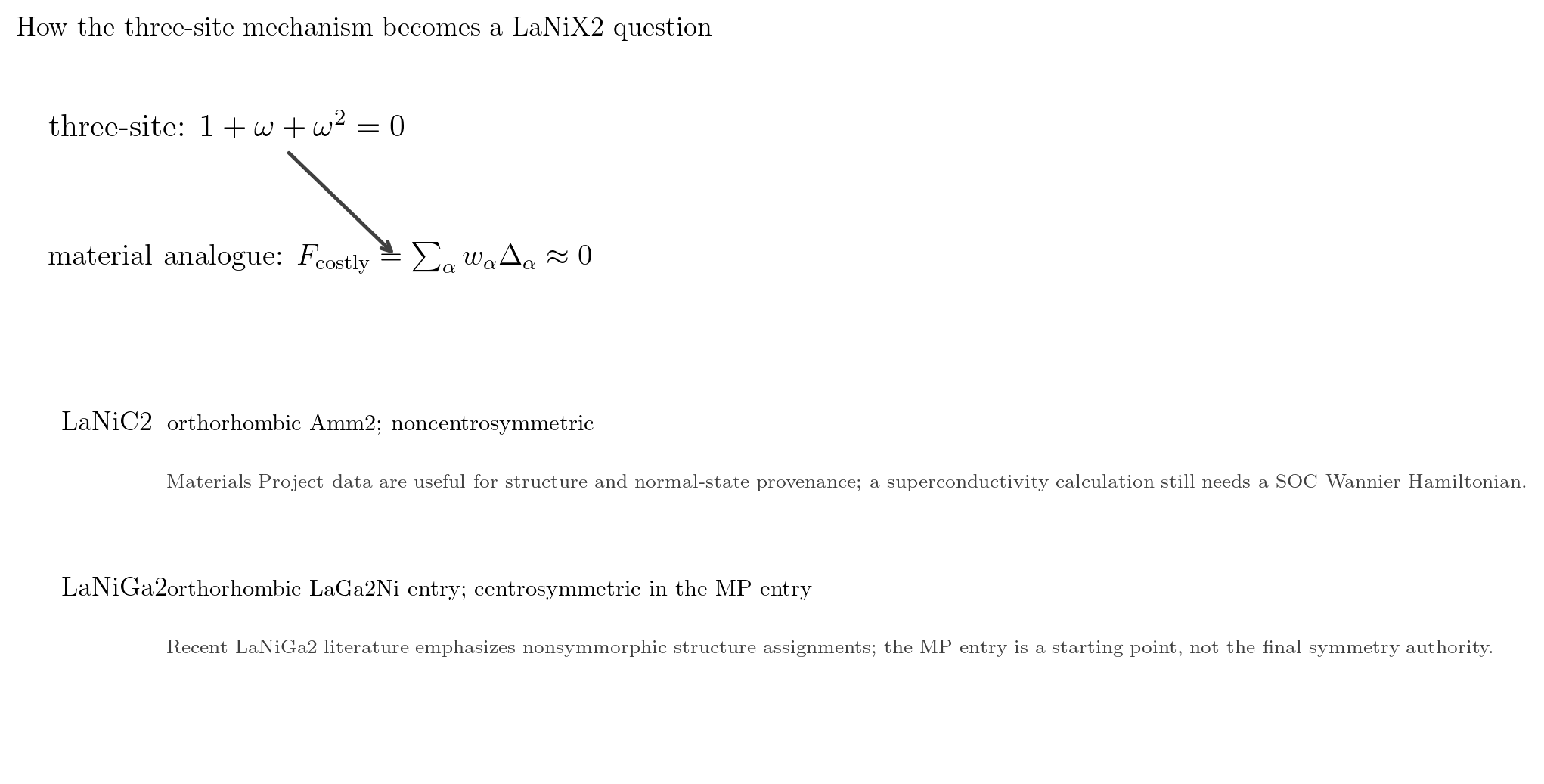
Figure 13.28: Orthorhombic LaNiX2 symmetry context for the loop-current route, retained as a bridge rather than a C4 material model.
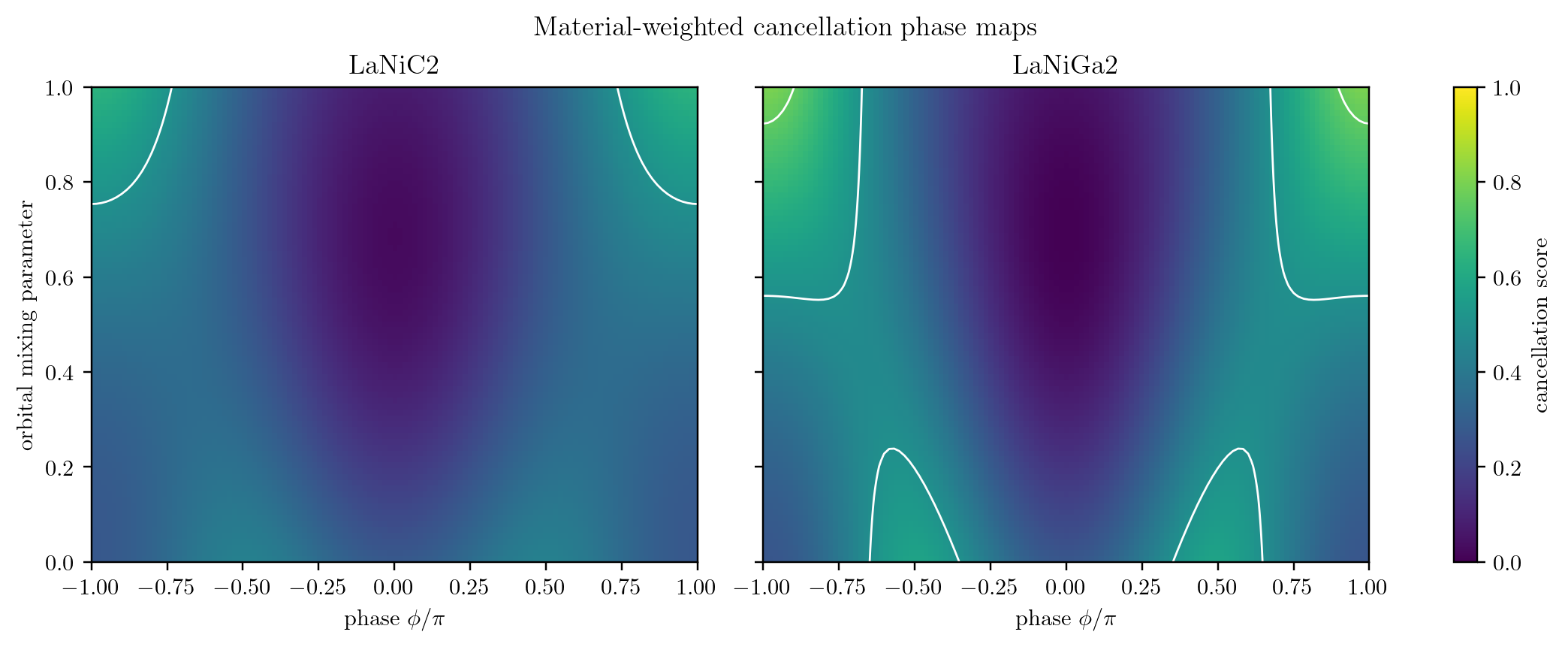
Figure 13.29: LaNiX2 cancellation maps for loop-current channel diagnostics.
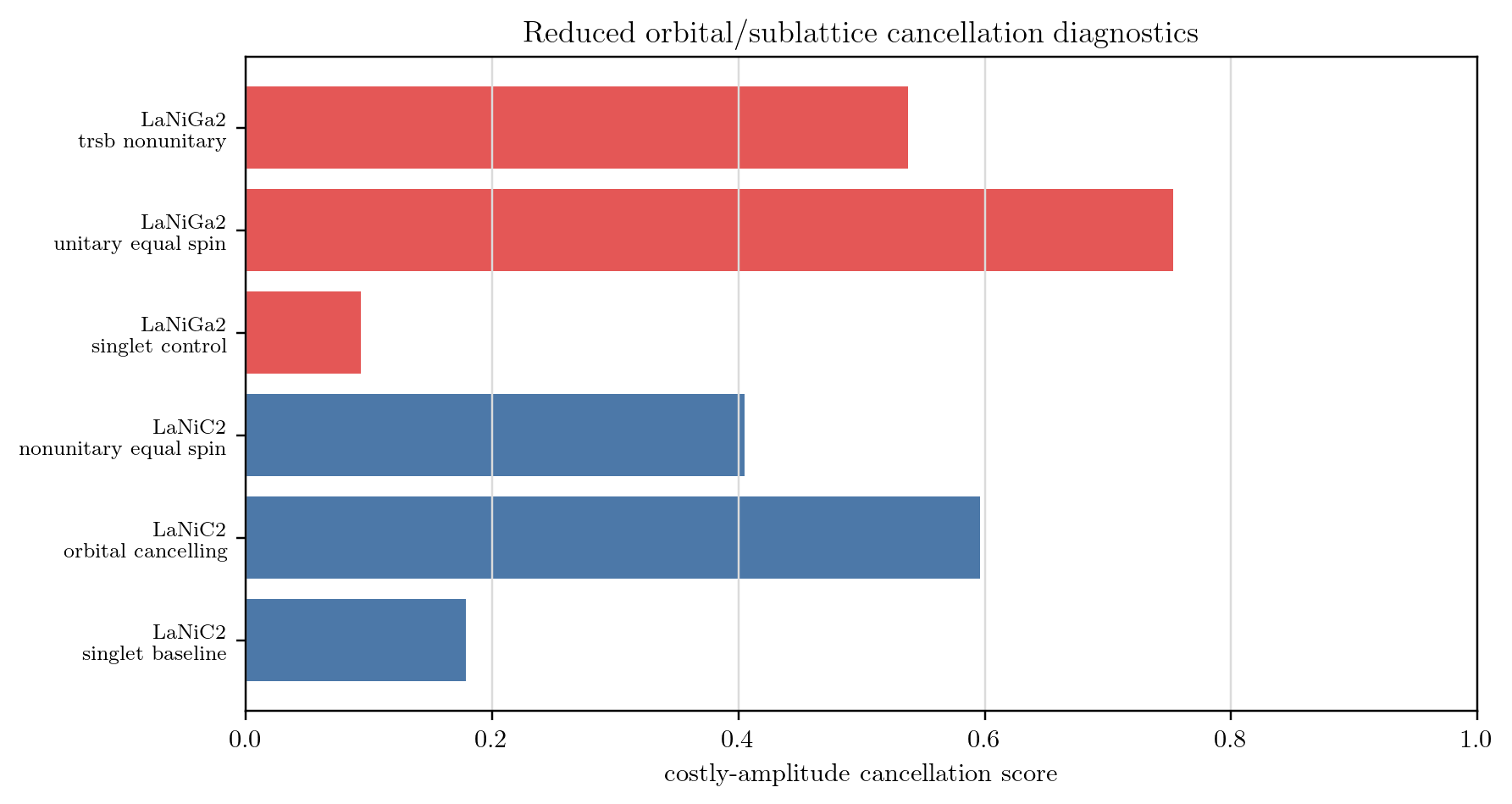
Figure 13.30: LaNiX2 pair-channel scores, retained as a bridge rather than a solved materials claim.
Seen this way, the negative results are not clutter. They are the reason the argument becomes sharper. C3 proves the interference principle, C4 reveals the staggered competitor, screw and balanced outside channels identify better phase selectors, full-HFB tests rule out naive tiny-molecule condensates, soft tubes show that lowering stiffness alone is not enough if amplitude is lost, hybrid Hartree-referenced clusters show that compact biasing still does not replace a reservoir, and explicit crystal-bath models show that a pair-susceptible reservoir can compensate the Hartree amplitude loss while preserving the node/antinode selector. The promoted island device then turns the same logic into the strict positive finite-device example.
Conclusion
Loop-supercurrent ordering gives a coherent microscopic route to time-reversal-symmetry breaking in multicomponent superconductors. The mechanism is real at the level of frustrated phase selection, interference nodes, BdG observables, signed crystal-bath HFG prototypes, and supplied- amplitude proximity models. The conservative conclusion is also clear: simple isolated onsite-Hubbard routes do not robustly self-generate and select winding order once all competitors and self-consistent fields are included. That negative result is why the mechanism needs an amplitude reservoir. In the current evidence this reservoir appears in two forms: pair-susceptible crystal-bath prototypes, which are positive but tuned and not yet material phase diagrams, and the promoted Josephson-island calculation, which gives a strict tuned finite-device winding minimum while leaving robustness and scale-up as open engineering questions.