Quantum matter and superconductors
Microscopic theory, unconventional superconductivity, quantum information, and the bridge from formal models to experiment.
I am a quantum researcher and system builder based in Cambridge. I work across theoretical physics, quantum computing, scientific software, teaching, and public explanation.
The common thread is straightforward: I want difficult ideas to become understandable, testable, and useful—and I build the tools and learning environments that help that happen.
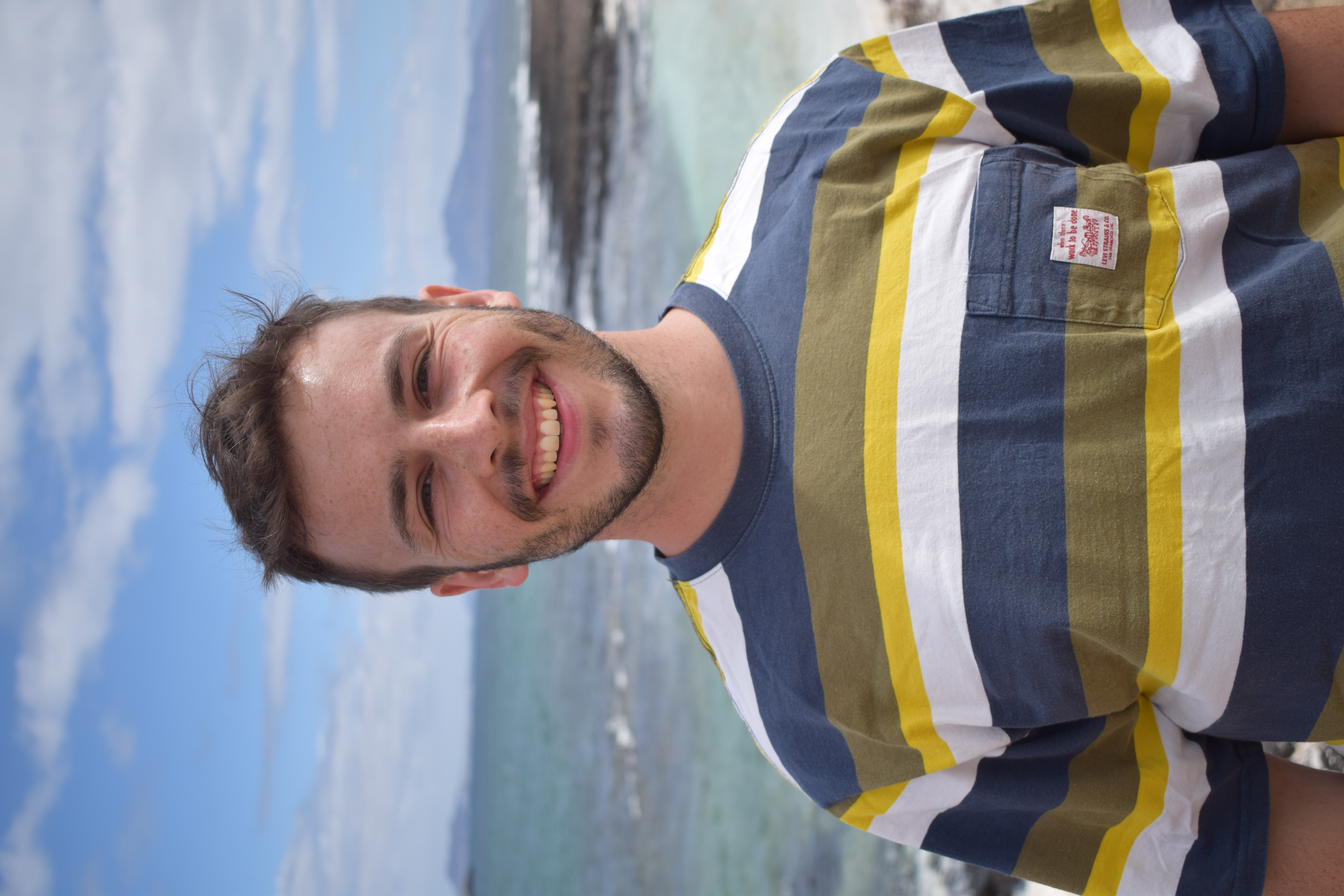
Henry Sheehy in Fuerteventura
I am completing a PhD at the University of Kent on microscopic theories of time-reversal-symmetry-breaking superconductors. The research connects formal models of unconventional superconductivity to the signatures that experiments can actually test.
Before that, I studied Theoretical Physics with Mathematics at Lancaster University, including work on quantum information, Majorana systems, and non-classical correlations. I also spent time studying in the United States at the University of Iowa and the University of Southern California.
At Qubitera I work on quantum computing in Cambridge, moving between mathematics, algorithms, physical intuition, code, and the practical question of how a proposed advantage can be tested honestly.
Research exposed a second problem: serious intellectual work is often divided between papers, notebooks, websites, folders, chats, classrooms, and institutions. The fragmentation makes it harder to think clearly, collaborate, and preserve what has been learned.
I began building the missing connections:
View research
Visit QuantaLumin
Explore TutorLumin
View Techno Antiques
See LuminOS
TutorLumin and QuantaLumin are connected but distinct. TutorLumin develops strong foundations through coherent courses and teaching. QuantaLumin provides the environment for deeper study, notebooks, projects, websites, and research. Techno Antiques is a design collaboration—not a subsidiary, partner entity, or TutorLumin customer.
Teaching is not separate from the research and systems work. Explaining a difficult idea reveals what is still vague; building a course reveals which prerequisites were assumed; giving a learner a good workspace changes what they can attempt.
Through TutorLumin I develop structured learning and work with other tutors. Through QuantaLumin I publish notes, demonstrations, notebooks, and longer projects. I also make videos and write about quantum physics, scientific work, learning, software, and the practical discipline required to sustain them.
I was born and raised in Brussels, completed the European Baccalaureate, and played rugby with Brussels Celtics for thirteen years. The Feynman Lectures, chemistry, mathematics, and further mathematics shaped my early sense that serious thinking should feel direct, fundamental, and alive.
Sport and the outdoors remain part of how I work and live. I have coached boxing, taught gymnastics, trained in karate, and qualified as a Rescue Diver. I am interested in lives that cross disciplines without becoming superficial: science with craft, physical practice with intellectual work, and technical precision with imagination.
You’re connecting to your QuantaLumin workspace on members.quantalumin.com.